Museu do Côa – “Nós na Arte”

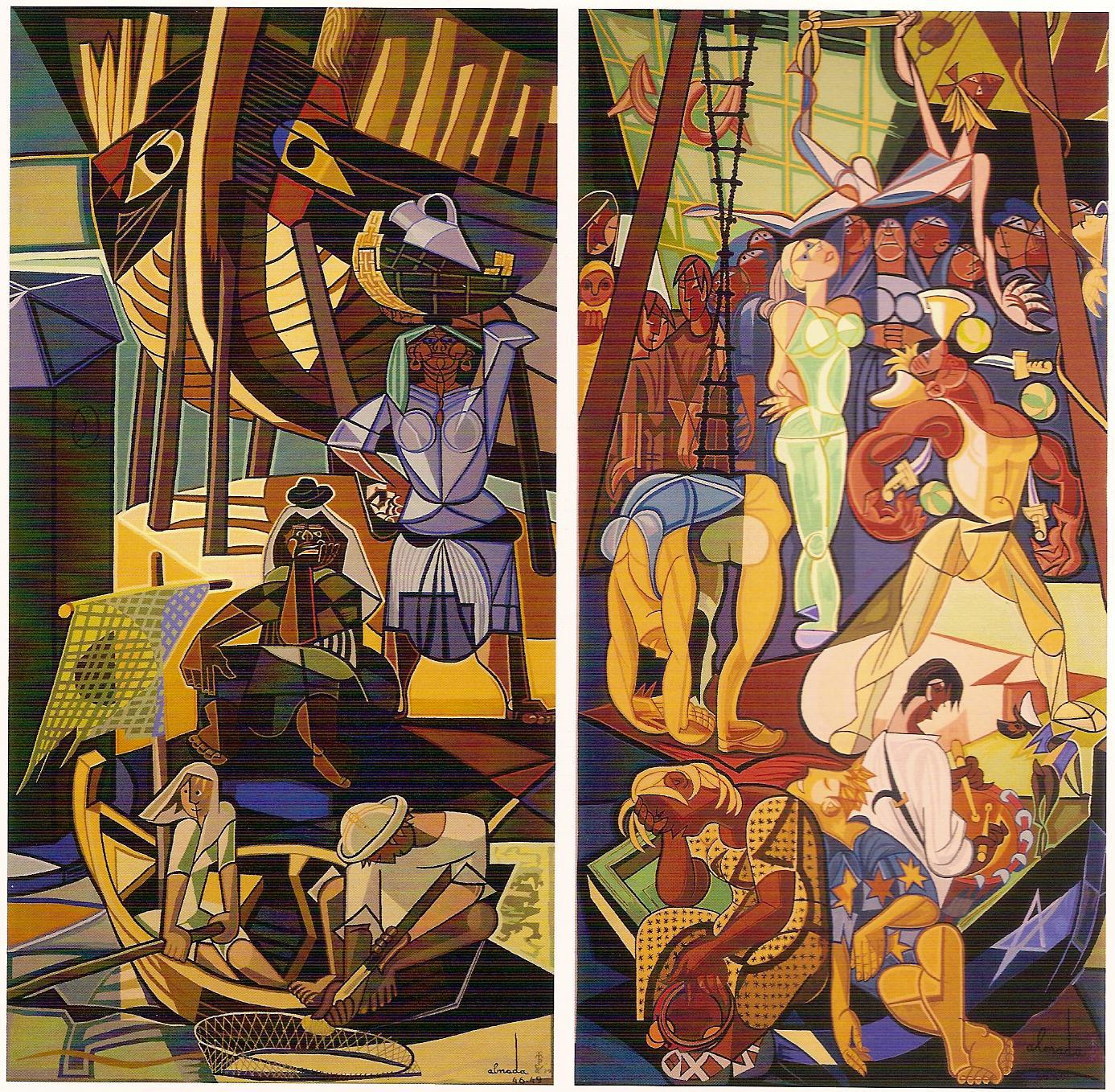
A Exposição “Nós na Arte – Tapeçaria de Portalegre e Arte Contemporânea” resulta de uma parceria entre a Fundação Côa Parque e o Museu da Presidência da República. As obras expostas em tapeçaria reproduzem trabalhos de Almada Negreiros em painéis de 4mx2,5m, obras que já percorreram outros locais, dando agora uma oportunidade sublime aos naturais da região do Côa e não só!
De 18 de Maio a 30 de Setembro de 2012, no Museu do Côa. Via José Ribeiro.

Musica Aeterna – Hildegard von Bingen

Musica Aeterna dedicado à vida e a obra de Hildegard von Bingen (1098-1179), a “Sibila do Reno”, abadessa beneditina, visionária, profetisa teutónica e considerada como a compositora mais importante da Idade Média.


Myth: Women were oppressed in the Middle Ages
In the 1960s and 1970s, the idea that women were oppressed in the Middle Ages flourished. In fact, all we need to do is think of a few significant women from the period to see that that is not true at all: St Joan of Arc was a young woman who was given full control of the French army! Her downfall was political and would have occurred whether she were male or female. Hildegard von Bingen was a polymath in the Middle Ages who was held in such high esteem that Kings, Popes, and Lords all sought her advice. Her music and writing exists to this day. Elizabeth I ruled as a powerful queen in her own right, and many other nations had women leaders. Granted women did not work on Cathedrals but they certainly pulled their weight in the fields and villages. Furthermore, the rules of chivalry meant that women had to be treated with the greatest of dignity. The biggest difference between the concept of feminism in the Middle Ages and now is that in the Middle Ages it was believed that women were “equal in dignity, different in function” – now the concept has been modified to “equal in dignity and function”. Via.

«Vite! Vite! Mon barnais! Mon cheval!»

Jeanne d’Arc, chef de guerre ou simple mascotte (avril 1429 – mai 1430)?
Ses frères la rejoignent. On l’équipe d’une armure et d’une bannière blanche frappée de la fleur de lys, elle y inscrit Jesus Maria, qui est aussi la devise des ordres mendiants (les dominicains et les franciscains). En partance de Blois pour Orléans, Jeanne expulse ou marie les prostituées de l’armée de secours et fait précéder ses troupes d’ecclésiastiques. Arrivée à Orléans le 29 avril, elle apporte le ravitaillement et y rencontre Jean d’Orléans, dit « le Bâtard d’Orléans », futur comte de Dunois. Elle est accueillie avec enthousiasme par la population, mais les capitaines de guerre sont réservés. Avec sa foi, sa confiance et son enthousiasme, elle parvient à insuffler aux soldats français désespérés une énergie nouvelle et à contraindre les Anglais à lever le siège de la ville dans la nuit du 7 au 8 mai 1429. Via Wikipedia

Cristiano Holtz spielt Bach

Apresentação do novo CD de Cristiano Holtz ”Rare Works for Harpschord” – Johann Sebastian Bach (1685-1750)
10 de Abril 2012 – Casa-Museu Dr. Anastácio Gonçalves
Cravo M. Kramer, Rosengarten, a partir de um original G. Silbermann, Saxónia de c. 1740
Gravação efetuada nos dias 21, 22 e 23 de Setembro de 2011, na Igreja do Cemitério dos Ingleses, em Lisboa
Edição HERA 2125

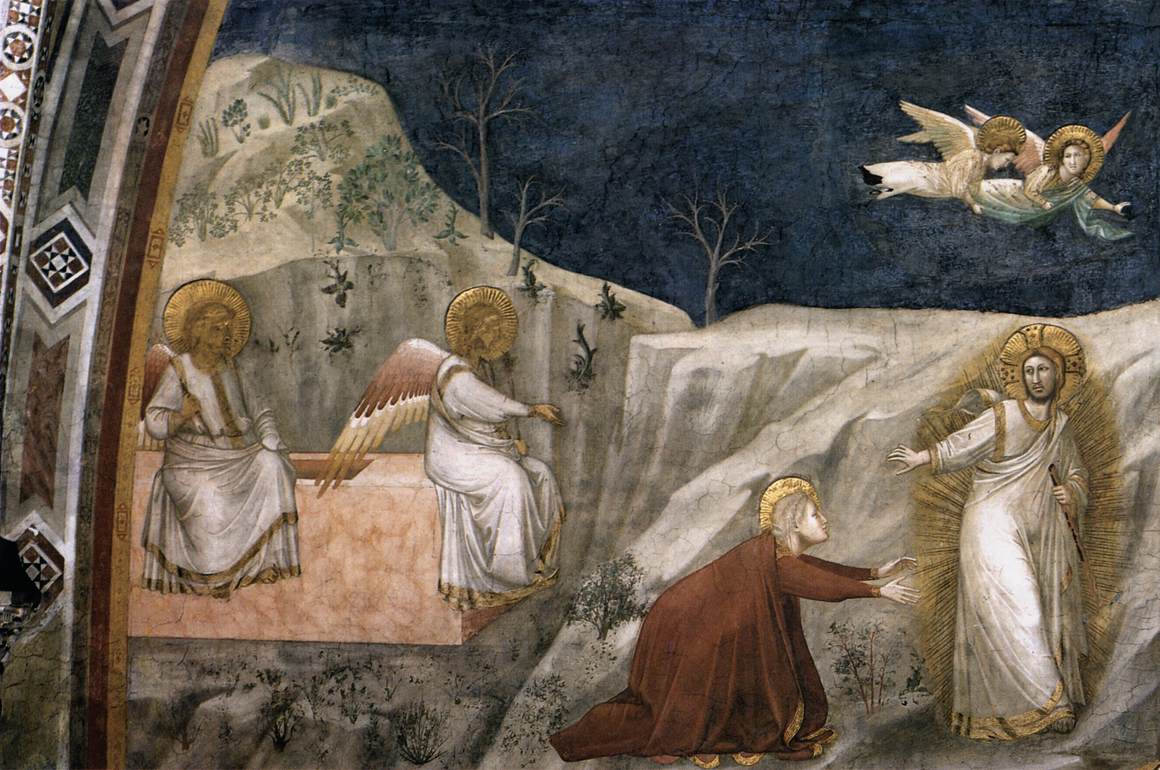
Noli Me Tangere

GIOTTO di Bondone (b. 1267, Vespignano, d. 1337, Firenze)
Scenes from the Life of Mary Magdalene: Noli me tangere, 1320s
Fresco | Magdalene Chapel, Lower Church, San Francesco, Assisi

Lúmen

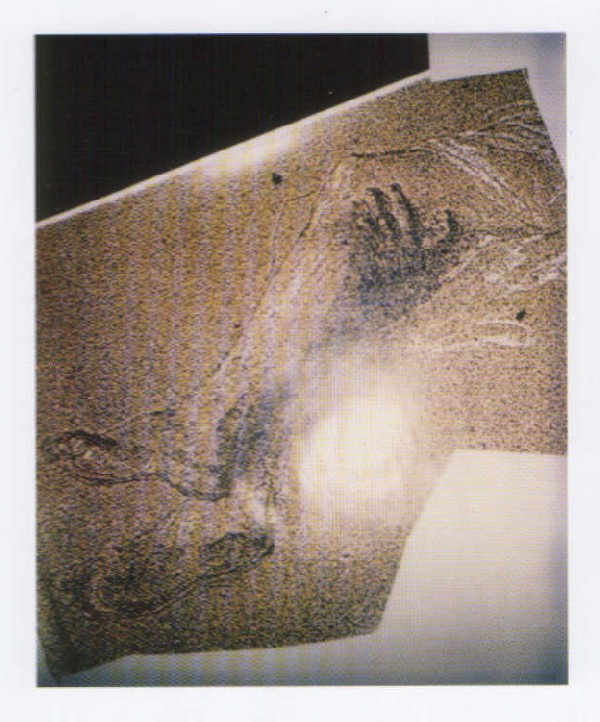
A força invisível da mão que segura o corpo contorcido de Cristo, descido da cruz.

Um corpo que se abandona, mas que nunca mais deixará de ser habitado, primeiro fóssil luminescente, em seguida luz pura.

Este corpo é já vestígio, memória. Mas é também recomeço. Indício.
Caminho para a luz. Para o que é ígneo.
A evocação do fogo que arde sem se ver, como uma paixão que se derrama numa intensidade luminosa.

Semelhante paixão (ou natureza) está contida na rocha, no sílex, que, raspado, produz faúlhas nos ramos retorcidos da árvore, combustível.
Será talvez uma oliveira, talvez não. Se for oliveira, então evoca a luz, a imortalidade, a relação cósmica, a morte e o monte famoso.

Imagens da Exposição de fotografias «Lúmen», de André Gomes.
Museu Nacional de Arte Antiga (Abril-Maio de 2006).

The Divine Comedy by Dante Alighieri

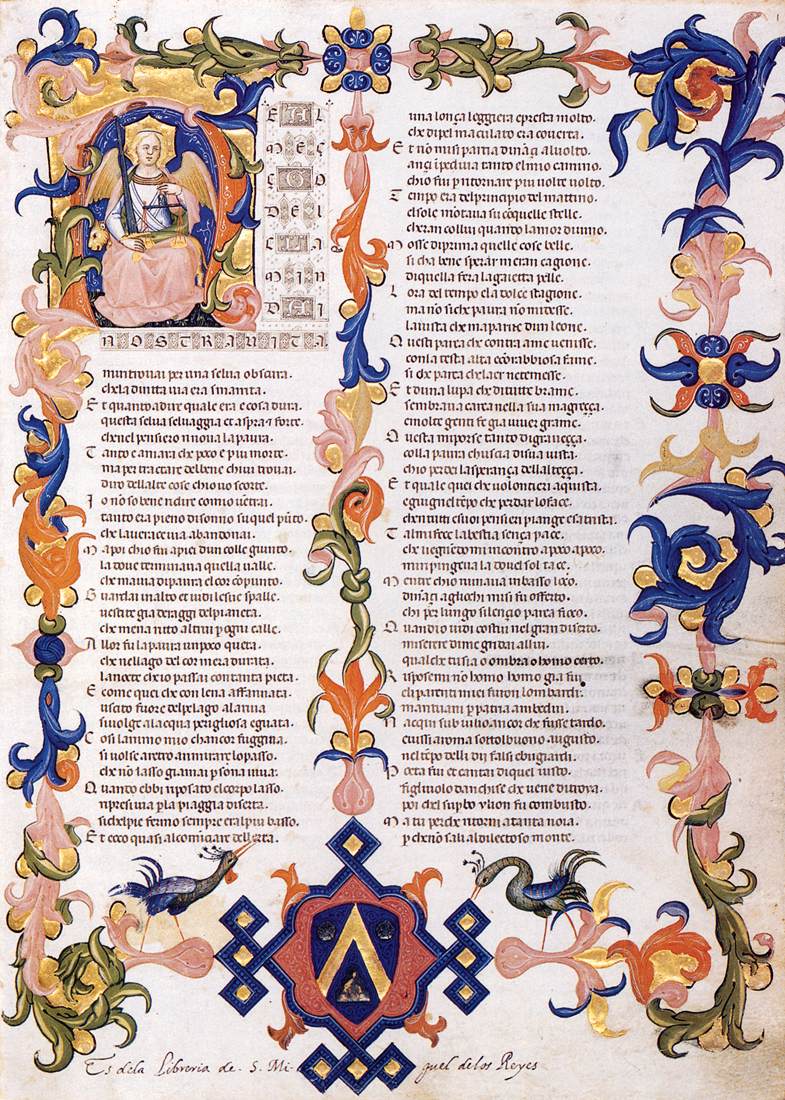
The masterpiece of the Florentine poet Dante Alighieri (1265-1321), The Divine Comedy was the most widely illuminated book of medieval literature, embraced as a subject for manuscript illumination within a decade of the author’s death. Conceived as an epic poem in three parts – Inferno (Hell), Purgatorio (Purgatory), and Paradiso (Paradise) – which are in turn subdivided into short sections called cantos, the Comedy is Dante’s personal account of a vision that he had during Holy Week in the year 1300.
The codex in New Haven is one of the finest examples of early Divine Comedy manuscripts to have survived, its remarkable state of preservation allowing full appreciation of the brilliant decoration and regular, harmonious writing. Conforming to an early type of Divine Comedy illustration, the illuminations are confined to the first page of each book, rather than to the whole text, as in later.
On folio 11, within an orange initial N (“Nel mezzo del cammin di nostra vita” [In the middle of the journey of our life]), marking the beginning of the first canto of the Inferno, appears an enthroned figure of Divine Justice. Winged, with a polygonal nimbus framing her head, and wearing a white and pink gown lined with green, she is seated on a lion, bearing a raised sword in her right hand and scales in her left. The brilliant palette, large, simplified forms and schematic rendering of the features are clear indicators of Don Simone’s authorship.

The second illuminated leaf is folio 27v, on which a large initial P in the middle left of the page, containing a second nimbed female figure with pink wings and an orange robe over a gilt tunic, illustrates the first canto of the Purgatorio (“Per correr migliore acqua alza le vele” [To course over better waters (now) lifts her sails]). Seated on a bank of clouds against a blue background, the figure cradles in her lap a nest in which perches a pelican feeding her young with blood from her own breast; an image known as the Pelican in Her Piety, it was a popular medieval symbol for the sacrifice of Christ and emblematic of Charity.

The last illuminated page is folio 54r, containing a large letter L to illustrate the beginning of the first canto of the Paradiso (“La gloria di colui che tutto muove” [The glory of him who moves all things]). Within the initial stands a third nimbed figure with green wings, wearing a white cape lined with green and orange and a blue dress, on which is emblazoned a head surrounded by golden rays. She is holding burning flames in both hands, while above her head floats a blue disk studded with stars, among which is visible a small crescent-shaped moon. The identity of this figure is less easily ascertained than in the previous two initials in the codex. It can be identified most probably as Divine Love.

Iluminator: Don Simone Camaldolese (active 1378-1405 in Florence)
Italian illuminator. He was a Camaldolese monk of Santa Maria degli Angeli, Florence, the scriptorium of which was an important centre of manuscript production. Documented there between 1378 and 1389, he was a slightly younger contemporary of Don Silvestro dei Gherarducci, and he was probably the teacher of Lorenzo Monaco. His signature Simon de Senis in an Antiphonary completed in 1381 (Florence, Biblioteca Medicea-Laurenziana) indicates that he was from Siena, although his work shows both Florentine and Sienese stylistic traits. His sweet, lyrical colour range of pale straw-yellows and lively turquoise shades shows knowledge of such Sienese artists as Lippo Vanni, while the ponderous forms are typical of the prevalent style practiced by such artists as Andrea and Jacopo di Cione Orcagna and Giovanni del Biondo in mid-14th-century Florence. Source.

Museu Berardo no Google Art Project

O Museu Colecção Berardo é um dos 151 que passam a integrar o Google Art Project, que permite ver obras das instituições parceiras e ainda “passear” pelas galerias de algumas delas. Ver notícia no Público.

Uma das obras digitalizadas é esta  ‘Untitled (Ponte)’ – 1914, de Amadeo de Souza Cardoso, da qual reproduzo um fragmento.

The Harmony of the World

The Harmony of the World: Book V – XLII. Proposition – By Joahannes Kepler [1571-1630]
Kepler’s Harmonices Mundi

The greater common proportion of Mars and the Earth, or that of their diverging motions, was necessarily made 54:125, less than the harmony 5:12 confirmed by the a priori arguments.

VangelisMythodea

For Mars`s own proportion had to be a diapente, from which a diesis was removed, by the previous proposition. However, the common proportion of the converging motions of Mars and the Earth, or the lesser common proportion, had to be a diapente, 2:3, by XV. Last, the Earth’s own proportion is a doubled diesis, from which a comma has been removed, by XXVI and XXVIII. Now of these elements elements is composed the greater proportion, or that of the diverging motions, of Mars and the Earth; and it comes to two diapentes [or 4:9, that is 108:243] together with one diesis which is mutilated of a comma, that is together with 243:250. That is, it comes to 198:250, or 54:125, that is 608:1500. But that is less than 625:1500, that is, than 5:12, by the factor of 608:625, and that is nearly 36:37, less than the smallest melodic interval.

Miles Davis: The Complete Live at The Plugged Nickel

Volto ao standard Stella by Starlight, integrado na série de oito discos gravados ao vivo no Clube Plugged Nickel de Chigado,  pouco antes do Natal de 1965. A composição do segundo quinteto, com Wayne Shorter a substituir George Coleman no saxofone tenor, recupera os solos da explosão criativa de finais da década de 50. Back to basics…! 🙂


Stella by Starlight (Live at the Plugged Nickel, Chicago, IL) (1st Set) (- December 22, 1965) · Miles Davis
The Complete Live At The Plugged Nickel – 1965