‘Fisherman’s house on a lake’, by Albrecht Dürer
From Albrecht Dürer [21 May 1471 – 6 April 1528] – ‘Fisherman’s house on a lake, near Nuremberg, a watercolour’, around AD 1496. Via British Museum.

Arquivo por Autor
From Albrecht Dürer [21 May 1471 – 6 April 1528] – ‘Fisherman’s house on a lake, near Nuremberg, a watercolour’, around AD 1496. Via British Museum.
From Miles Davis [May 26, 1926 – September 28, 1991], the only live performance of “Concierto de Aranjuez” took place at Carnegie Hall under the subtitle “The Legendary Performances of May 19, 1961“, featuring Hank Mobley, Wynton Kelly, Paul Chambers, Jimmy Cobb with Gil Evans and his 21 Piece Orchestra.
Elvin Jones [September 9, 1927 – May 18, 2004] fotografado em 12 Agosto 1961 por Francis Wolff, durante os ensaios do album de Freddie Hubbard «Ready for Freddie».

Irmão do pianista Hank Jones, Elvin é um dos mais importantes bateristas da história do jazz.
Antes de integrar o Quarteto de John Coltrane na primeira metade da década de sessenta gravou, para citar apenas dois exemplos, Night at the Village Vanguard com Sonny Rollins em 1957 e Sketches of Spain com Miles Davis em 1959.
Crisis, o último tema do álbum de Freddie Hubbard – «Ready for Freddie», 1962.
Músicos: Freddie Hubbard (t), Bernard McKinney (e), Wayne Shorter (ts), McCoy Tyner (p), Art Davis (db), Elvin Jones (d)
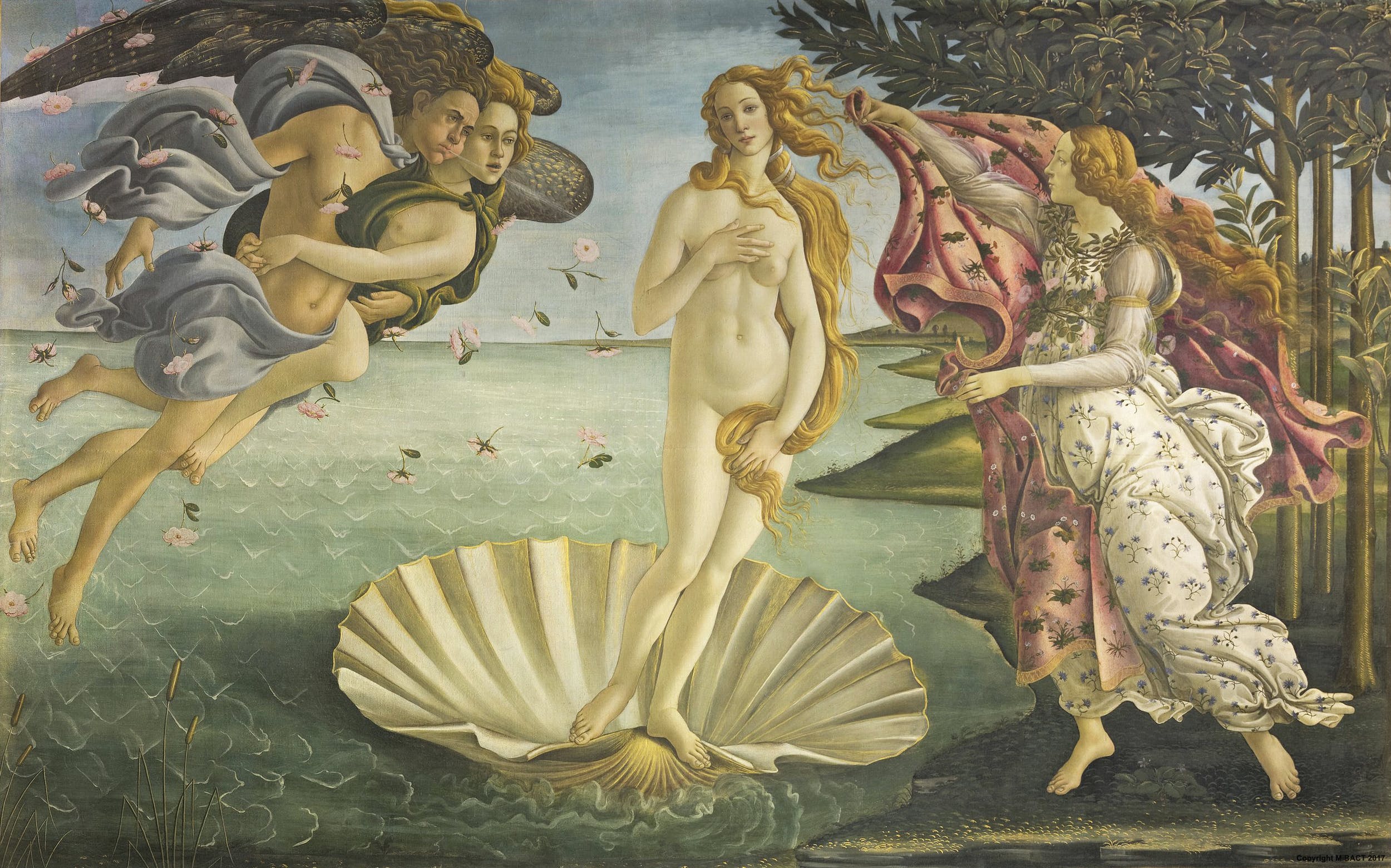
Sandro Botticelli [c. 1445 – 17 Maio 1510]
“Nascimento de Vénus”, c. 1485 | Gallerie degli Uffizi, Florença
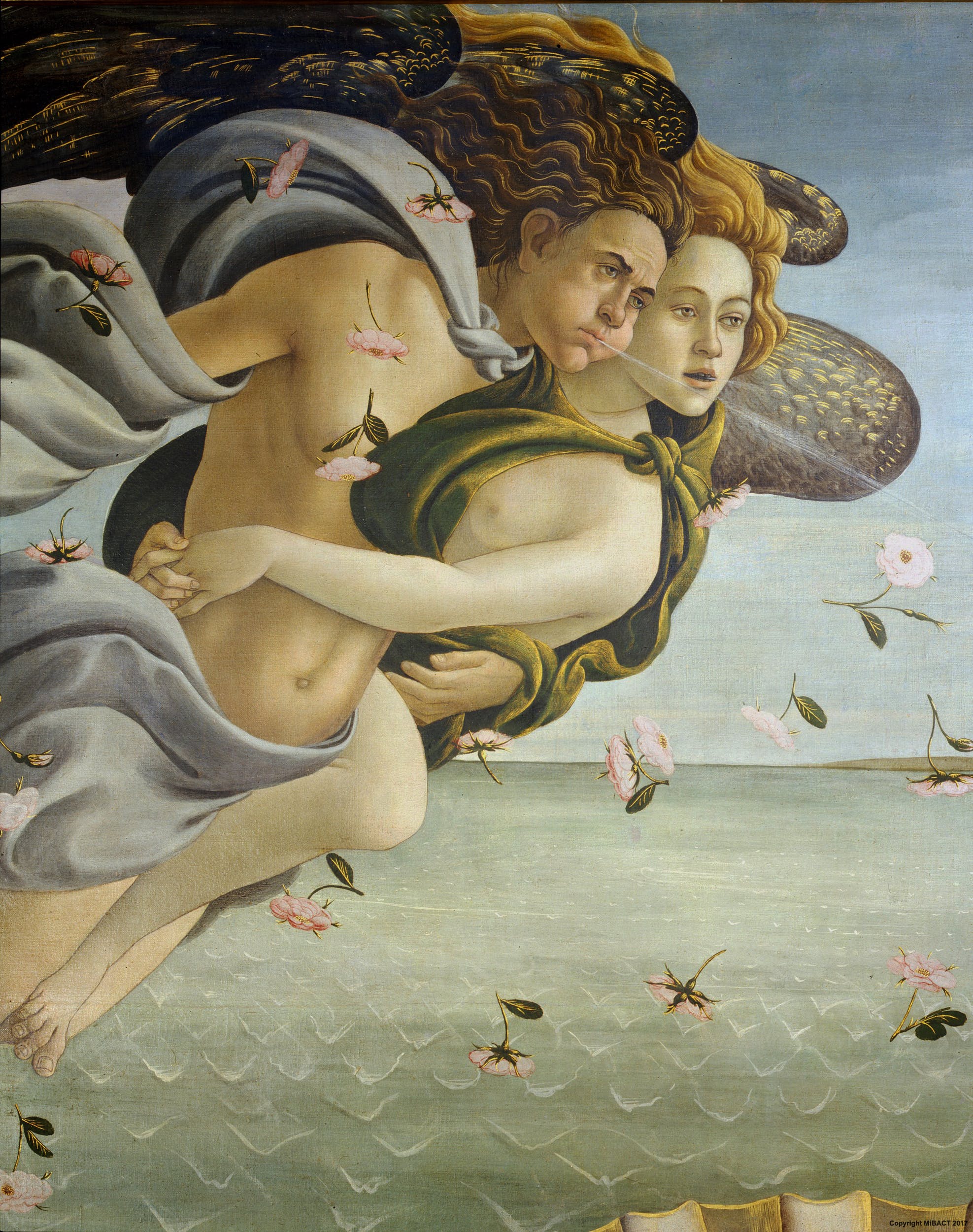
Known as the “Birth of Venus”, the composition actually shows the goddess of love and beauty arriving on land, on the island of Cyprus, born of the sea spray and blown there by the winds, Zephyr and, perhaps, Aura. The goddess is standing on a giant scallop shell, as pure and as perfect as a pearl. She is met by a young woman, who is sometimes identified as one of the Graces or as the Hora of spring, and who holds out a cloak covered in flowers. Even the roses, blown in by the wind are a reminder of spring. The subject of the painting, which celebrates Venus as symbol of love and beauty, was perhaps suggested by the poet Agnolo Poliziano.
It is highly probable that the work was commissioned by a member of the Medici family, although there is nothing written about the painting before 1550, when Giorgio Vasari describes it in the Medici’s Villa of Castello, owned by the cadet branch of the Medici family since the mid-15th century. This hypothesis would seem to be born out by the orange trees in the painting, which are considered an emblem of the Medici dynasty, on account of the assonance between the family name and the name of the orange tree, which at the time was ‘mala medica’.
Unlike the “Allegory of Spring”, which is painted on wood, the “Birth of Venus” was painted on canvas, a support that was widely used throughout the 15th century for decorative works destined to noble houses.
Botticelli takes his inspiration from classical statues for Venus’ modest pose, as she covers her nakedness with long, blond hair, which has reflections of light from the fact that it has been gilded; even the Winds, the pair flying in one another’s embrace, is based on an ancient work, a gem from the Hellenistic period, owned by Lorenzo the Magnificent.
Via Gallerie degli Uffizi.
Para celebrar o 25º aniversário da morte de Lola Flores [21 Janeiro 1923 – 16 Maio 1995], será transmitido hoje no canal La 2 da televisão espanhola um documentário sobre os lugares que marcaram a vida de ‘La Faraona’.
Com a participação das suas netas Elena Furiase e Alba Flores (a deliciosa Nairobi de La casa de papel), de Miguel Poveda e de Estrella Morente, filha do Grande Enrique Morente.
Georges Braque [13 Mai 1882 – 31 Ago 1963] produziu L’Homme à la guitare no verão de 1911, durante o período em que partilhou o estúdio com Pablo Picasso.

Georges Braque [1882-1963] – “Man With a Guitar”, 1911
MoMA The Museum of Modern Art
Giovanni Battista Viotti [12 Maio 1755 – 3 Março 1824], compositor e talentoso violinista italiano, fixou-se durante uma década em Paris, onde se estreou no Concert Spirituel em 1782, mas a Revolução Francesa fê-lo viajar para Londres em 1792, ano em que escreveu este Violin Concerto No. 22 in A Minor, G. 97.
Durante os dois anos seguintes, Viotti obteve grande sucesso como violinista nos concertos organizados pelo compositor e empresário alemão Johann Peter Salomon, que dirigiu as «London symphonies» de Joseph Haydn.
Em 1813, Salomon e Viotti integraram a lista dos membros fundadores da Royal Philharmonic Society. O concerto inaugural incluiu obras de dois compositores que Viotti conheceu pessoalmente, Joseph Haydn e Ludwig van Beethoven.
Juan Gris [23 Mar 1887 – 11 Mai 1927]

Juan Gris [1887-1927] – «La bouteille d’anis (La botella de anís), 1914
Museo Reina Sofía, Madrid
En La bouteille d’anis (La botella de anís), Juan Gris rinde homenaje a los líderes del movimiento cubista, Picasso y Braque, e incluso a sí mismo como partícipe de los hallazgos surgidos en el seno de esta corriente. Así, en el motivo que da nombre a esta composición (una botella de este particular tipo de bebida espirituosa) aparecen los nombres de tres localidades ligadas por una u otra razón a los tres grandes cubistas (Picasso, Braque y el propio Gris): Badalona, cercana a Barcelona, París y Madrid. Cerca de los nombres de las tres ciudades se lee la palabra «premio» inscrita en sendos medallones de la etiqueta de la botella, término que Gris asocia con los triunfos de los creadores del movimiento, identificados, a su vez, con las tres localidades de referencia.
De otro lado, el tema en sí, la botella de anís, con su múltiple y facetada superficie, había sido representado frecuentemente por los pintores españoles del cambio de siglo, como Ramón Casas, que en 1898 había realizado un cartel de la conocida marca de Anís del Mono, o Picasso, que la incluyó en 1909 en una de sus composiciones cubistas de Horta. Incluso el mexicano Diego Rivera, en su etapa parisina, llegó a utilizar este mismo motivo en diversas ocasiones.
Paloma Esteban Leal, Museo Reina Sofía
No centésimo décimo séptimo aniversário da morte de Paul Gauguin [7 Junho 1848 — 8 Maio 1903], ‘Coming and Going, Martinique’ – um dos trabalhos que realizou durante o Verão de 1887 na Martinica, acompanhado pelo também pintor e seu amigo Charles Laval [17 Março 1862 – 27 Abril 1894], com quem partilhava a técnica do «simbolismo sintético».

Paul Gauguin [1848-1903] – ‘Coming and Going, Martinique’, 1887
Museu Nacional Thyssen-Bornemisza, Madrid







 Visita Guiada é um programa de televisão e de rádio que dá a conhecer o Património Cultural português.

 António Branco Almeida
 Ana Margarida Lopes