Archive for the ‘ Pintura ’ Category

‘Étretat. La falaise d’Aval’, de Eugène Boudin

Eugène Boudin [12 Julho 1824 – 8 Agosto 1898] passou o Verão e parte do Outono de 1890 na pequena vila de Étretat. Atraído pelas falésias da Costa da Normandia e pela luz, sempre presente nos seus trabalhos, Boudin pintou este ‘Étretat. La falaise d’Aval’, que hoje pertence à Colecção Carmen Thyssen-Bornemisza.

‘Verão’, de Giuseppe Arcimboldo

Os retratos de Giuseppe Arcimboldo [c.1527 – 1593], que morreu neste dia 11 de Julho, eram divertidas e surpreendentes composições de frutas e vegetais, como este “Verão” de 1563.


Giuseppe Arcimboldo [c.1527 – 1593] – ‘Verão’, 1563
Kunsthistorisches Museum, Vienna

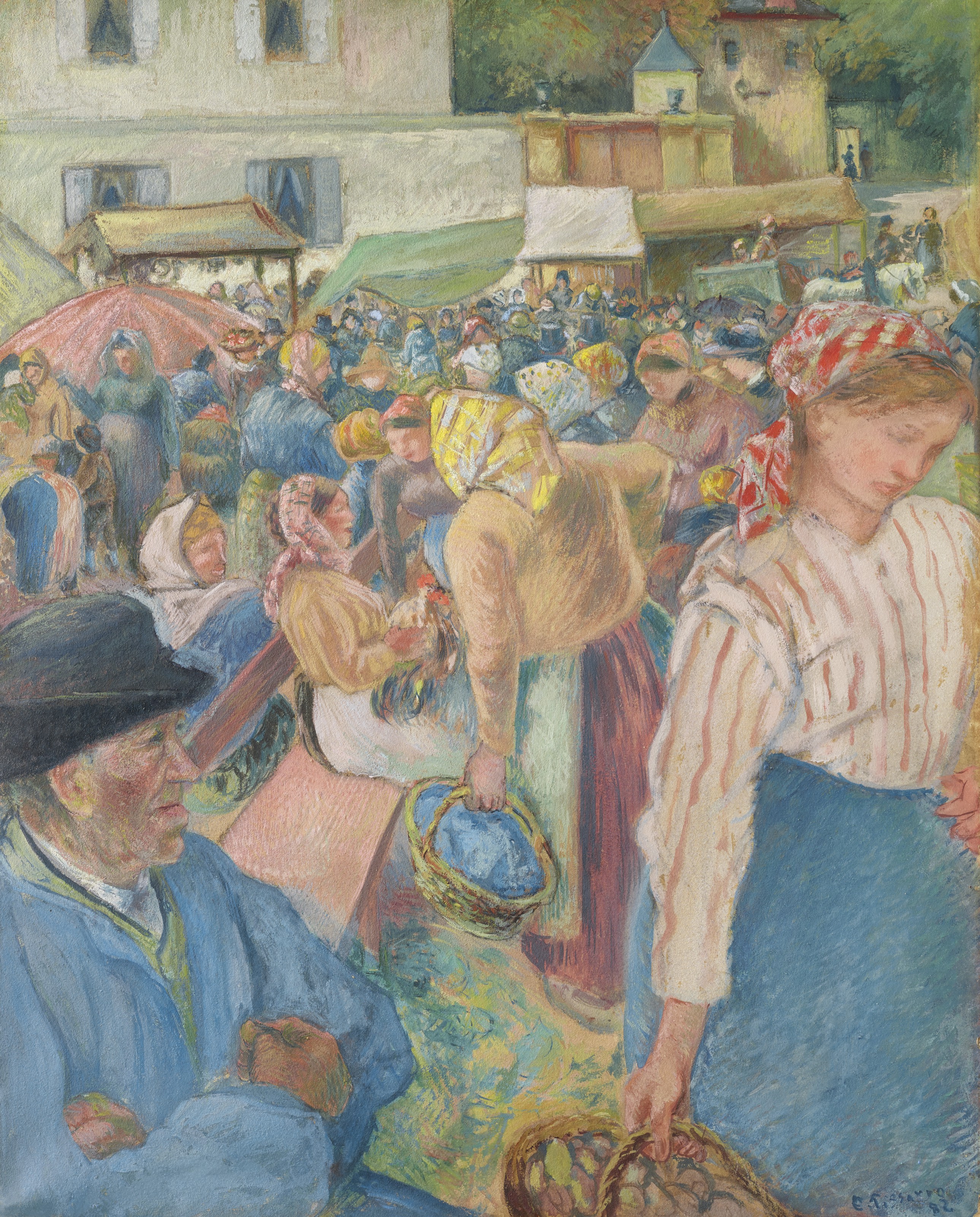
‘Marché à la volaille, Pontoise’, de Camille Pissarro

Camille Pissarro [10 Julho 1830 – 13 Novembro 1903]
Marché à la volaille, Pontoise,1882.


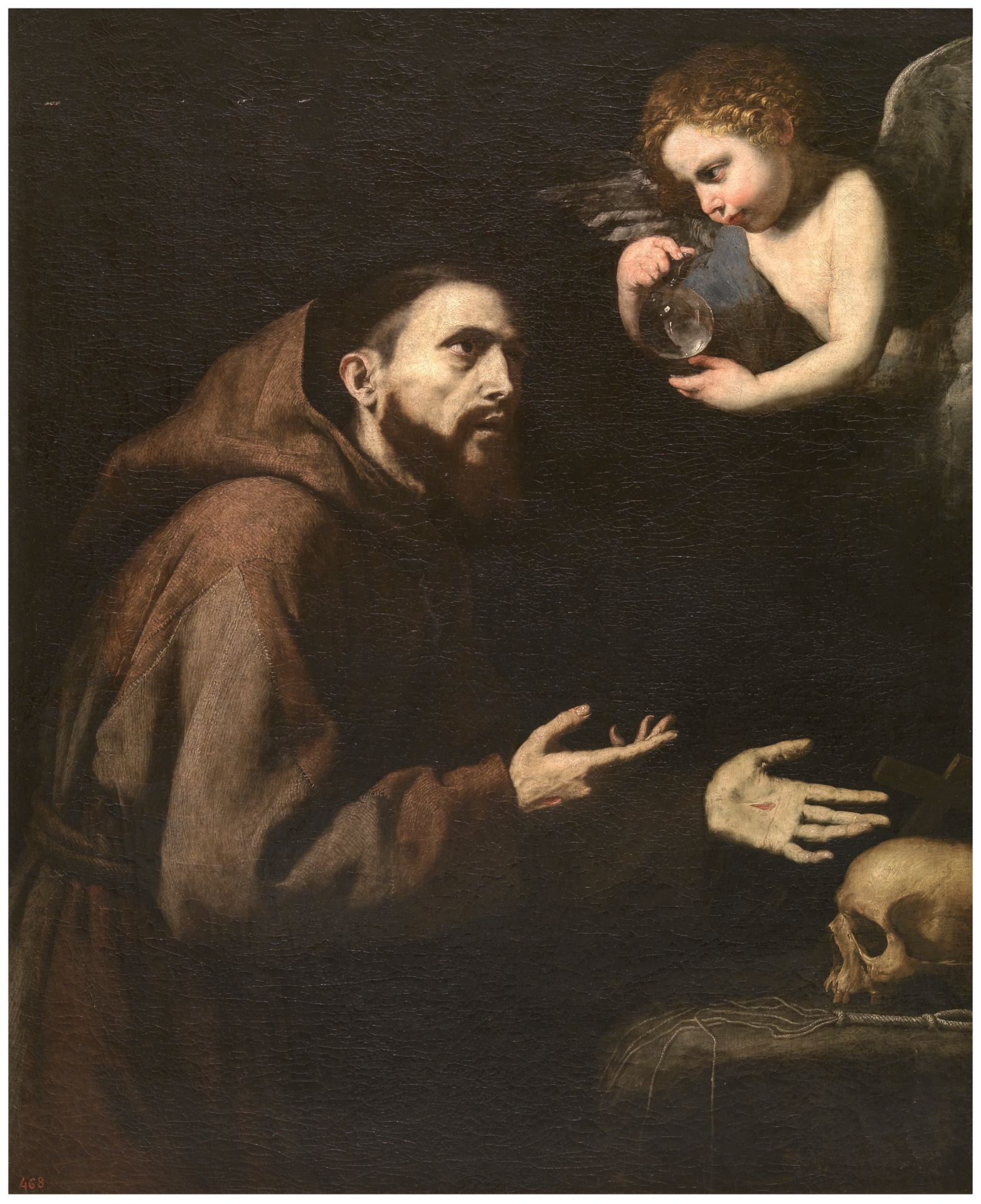
‘Visión de san Francisco de Asís’, de José de Ribera

Tal día como hoy nacía san Francisco de Asís, santo que fundó la Orden Franciscana. En este cuadro, José de Ribera [1591-1652] muestra a san Francisco contemplando un ángel con un recipiente de cristal lleno de agua, alusiva a la pureza. La calavera y el flagelo sobre la piedra aluden a la penitencia y la humildad. Obra de madurez del artista, todavía se perciben ecos tenebristas. Via Museo Nacional del Prado.

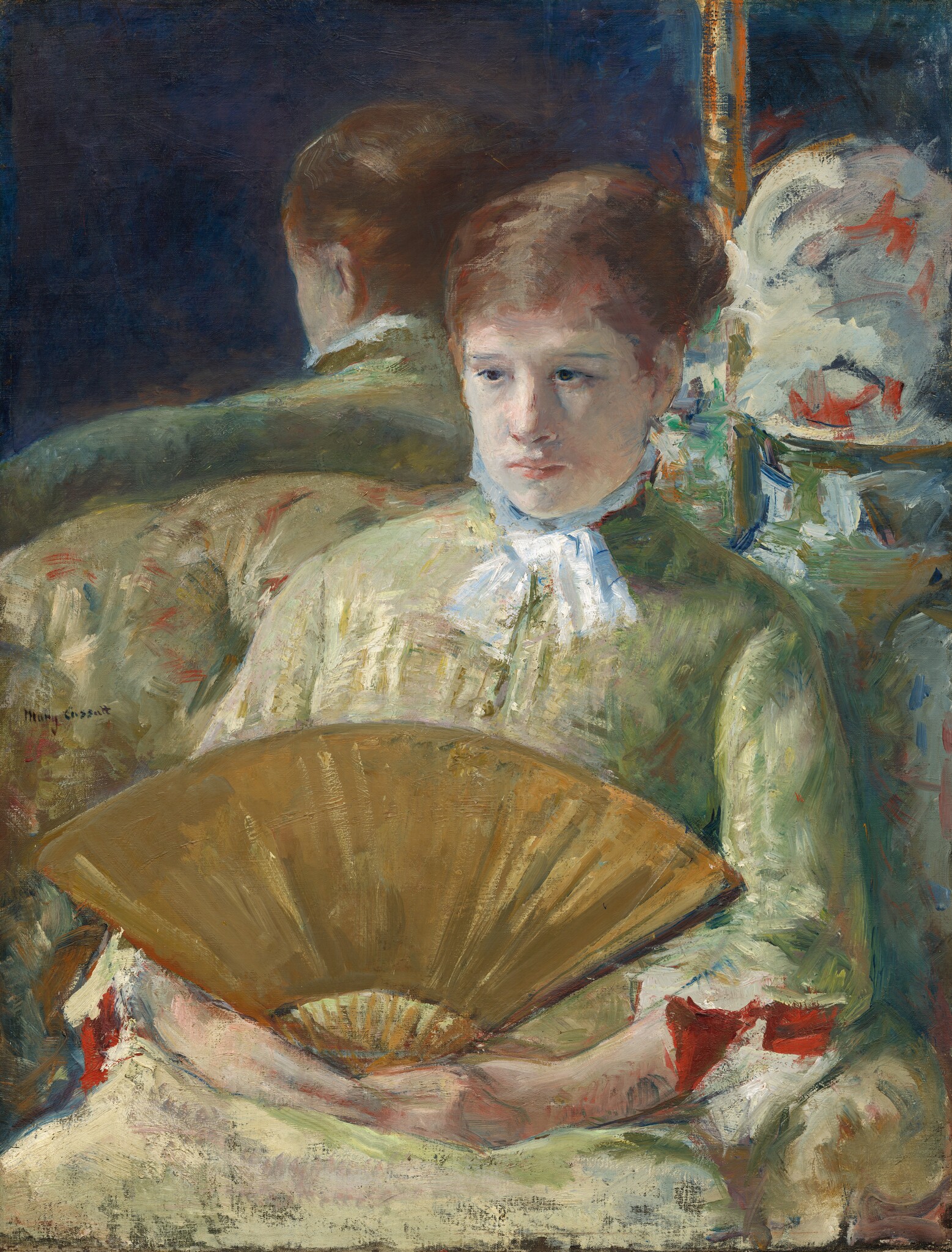
‘Woman with a Fan’, by Mary Cassat

From Mary Stevenson Cassat [22 May 1844 – 14 June 1926], ‘Woman with a Fan’, c. 1878/1879.

Miss Mary Ellison, c. 1880, oil on canvas
Chester Dale Collection – National Gallery of Art, Washington


This painting is the second of two portraits by Mary Cassatt thought to be of Mary Ellison. Cassatt painted the first in 1877, shortly after she met Miss Ellison through their mutual friend, Louise Waldron Elder (later Mrs. H. O. Havemeyer, a well-known American art collector and a patron of Cassatt). Cassatt does not flatter but, rather, concentrates on Miss Ellison’s contemplative mood.

In this painting, Cassatt demonstrates her affinities with the impressionists. Her brushwork is open and sketchy, and she favors a strong compositional structure over pictorial detail. The mirror behind Ellison was a device the artist used often; its presence allowed the expansion of the composition’s implied space to include areas that the viewer could not otherwise see. Via.


‘Harvest: Le Pouldu’, de Paul Gauguin

Paul Gauguin [7 June 1848 — 8 May 1903] executed this harvest scene whilst staying at Le Pouldu in Cap Finistère, Brittany. He had been the central figure of a group of painters at the nearby village of Pont-Aven. Then in 1890 he moved to Le Pouldu in search of an even simpler way of life. By this time Gauguin had abandoned his early Impressionist manner. Influenced by folk art and primitive art, he began to use flat areas of colour and a distorted perspective in his paintings. The landscape and life of the peasant community inspired some of the most rugged and radically simplified works of his career. Via tate.org.uk.

Paul Gauguin – ‘Harvest: Le Pouldu’, 1890 | Tate Gallery

‘El juicio de Paris’, de Rubens

Tal día como hoy fallecía en Amberes en 1640 Pieter Pauwel Rubens [28 Junio 1577 – 30 Mayo 1640], pintor barroco de la escuela flamenca.

La historia del Juicio de Paris se remonta a las bodas de Tetis y Peleo, narrada en las Fabulas de Higinio. En el banquete, Eris, diosa de la Discordia, lanzó una manzana retando a la más hermosa de las diosas a que la recogiera. Ante la disputa entre Venus, Juno y Minerva, Zeus decidió darle la manzana a Mercurio y que Paris actuase como juez.
El juicio aparece descrito en las Heroidas de Ovidio (XVI 65-88):
“(…)el heraldo alado me dijo: “tú eres el arbitro de la belleza; termina con las aspiraciones de las diosas; pronuncia cual de ellas merece derrotar a las otras dos a causa de su belleza” (…) la consorte Juno me ofreció tronos, su hija, poder en la guerra(…) Dulcemente Venus sonrió: “Paris, no dejes que esos regalos te conmuevan, ambos están llenos de miedo!” me dijo “mi regalo será el amor y la belleza de la hija de Leda, más hermosa que su madre, que vendrá a tus brazos”.
Finalmente Paris optó por esta última consiguiendo así la mano de Helena, desencadenando la guerra de Troya.
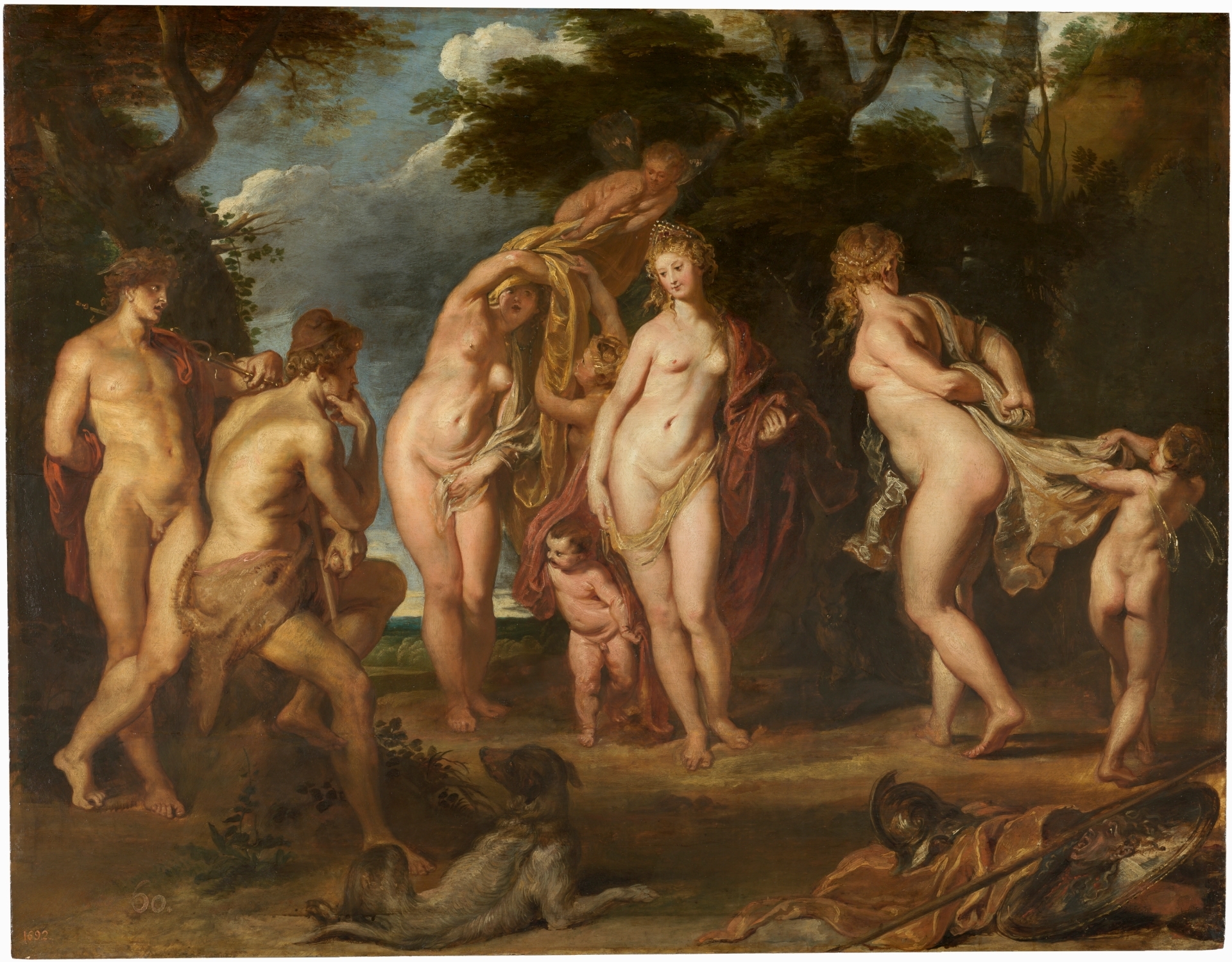
El tema del Juicio de Paris fue utilizado por Rubens en multitud de ocasiones, permitiendo al autor deleitarse en el ideal de belleza femenino, y también considerar las consecuencias del amor. Al igual que sucede con otras de las versiones del artista sobre este tema, la atención recae en el grupo de diosas que se encuentran en el centro de la composición, rodeadas de cupidos que tratan de quitarles la ropa. Venus, en medio de las tres y coronada, se muestra más tranquila que las otras, que parecen luchar para desvestirse. Los hombres, en la parte izquierda, parecen casi ajenos a la composición, como si la contemplaran en vez de participar en ella. A pesar de ser una pintura temprana se relaciona con algunas de las características de sus obras más tardías, como es la diferencia en el tratamiento lumínico de los personajes, destacando el brillo y la frialdad de los cuerpos femeninos frente a los masculinos, que reciben una luz menor y más cálida. Además los cuerpos desnudos, construidos mediante líneas sinuosas y ondulantes, y la mirada de Venus evocan la sensualidad y el amor de sus últimas obras. La principal diferencia es la técnica, ejecutada en este caso con una pincelada menos suelta y con mayor importancia de la línea.

Via Museo del Prado.

‘Fisherman’s house on a lake’, by Albrecht Dürer

From Albrecht Dürer [21 May 1471 – 6 April 1528] – ‘Fisherman’s house on a lake, near Nuremberg, a watercolour’, around AD 1496. Via British Museum.

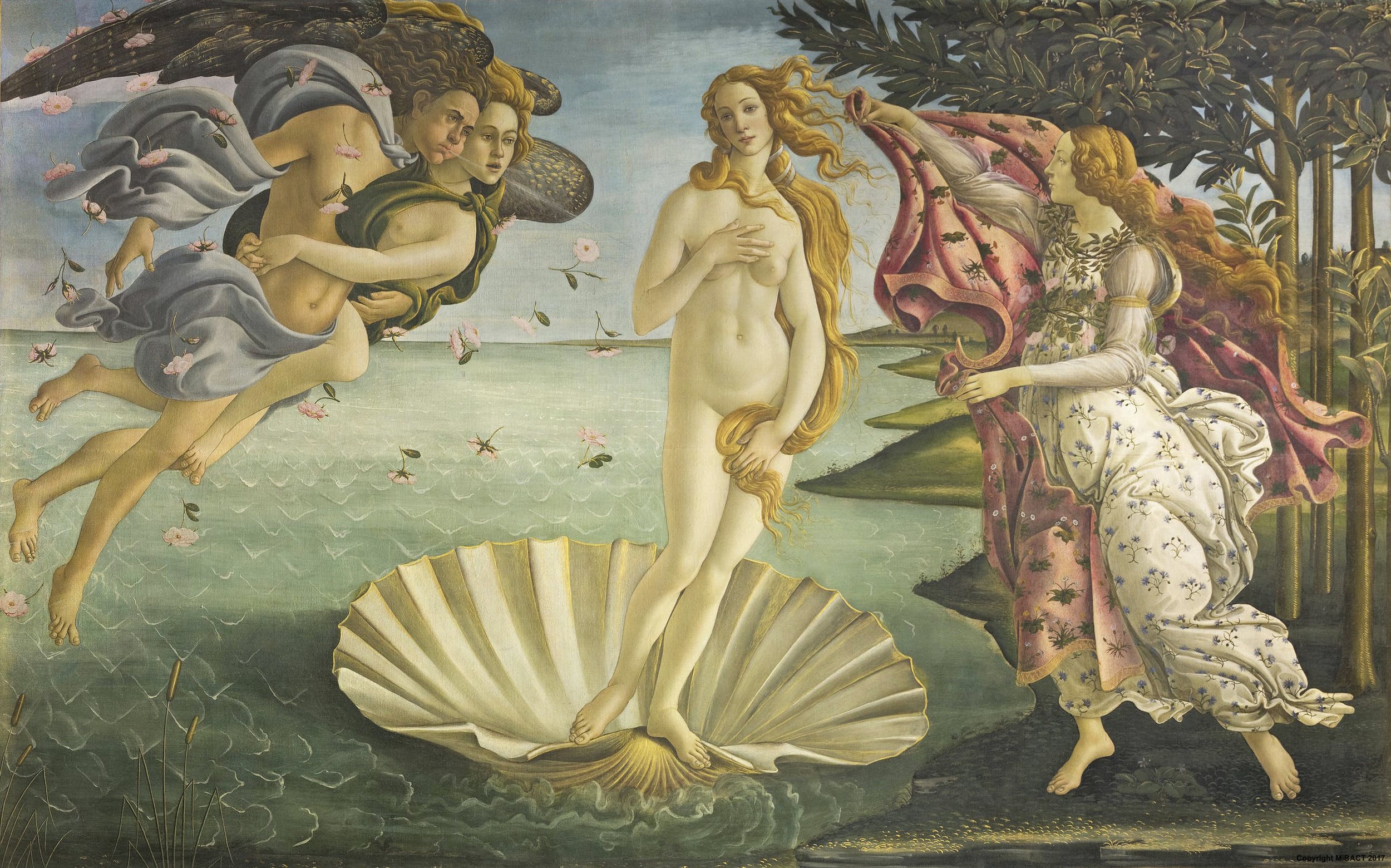
‘Nascita di Venere’, de Sandro Botticelli

Sandro Botticelli [c. 1445 – 17 Maio 1510]
“Nascimento de Vénus”, c. 1485 | Gallerie degli Uffizi, Florença

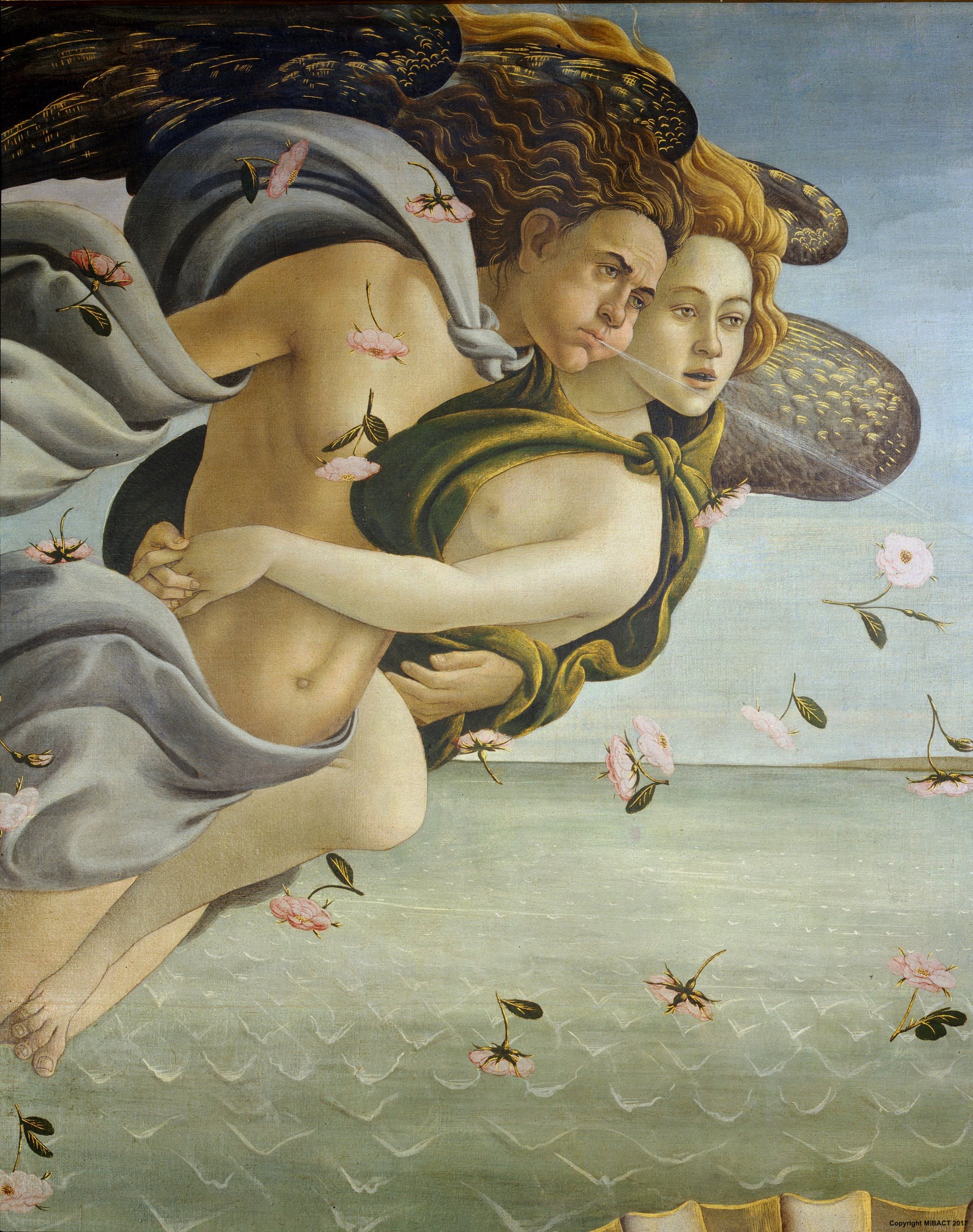
Known as the “Birth of Venus”, the composition actually shows the goddess of love and beauty arriving on land, on the island of Cyprus, born of the sea spray and blown there by the winds, Zephyr and, perhaps, Aura. The goddess is standing on a giant scallop shell, as pure and as perfect as a pearl. She is met by a young woman, who is sometimes identified as one of the Graces or as the Hora of spring, and who holds out a cloak covered in flowers. Even the roses, blown in by the wind are a reminder of spring. The subject of the painting, which celebrates Venus as symbol of love and beauty, was perhaps suggested by the poet Agnolo Poliziano.

It is highly probable that the work was commissioned by a member of the Medici family, although there is nothing written about the painting before 1550, when Giorgio Vasari describes it in the Medici’s Villa of Castello, owned by the cadet branch of the Medici family since the mid-15th century. This hypothesis would seem to be born out by the orange trees in the painting, which are considered an emblem of the Medici dynasty, on account of the assonance between the family name and the name of the orange tree, which at the time was ‘mala medica’.

Unlike the “Allegory of Spring”, which is painted on wood, the “Birth of Venus” was painted on canvas, a support that was widely used throughout the 15th century for decorative works destined to noble houses.

Botticelli takes his inspiration from classical statues for Venus’ modest pose, as she covers her nakedness with long, blond hair, which has reflections of light from the fact that it has been gilded; even the Winds, the pair flying in one another’s embrace, is based on an ancient work, a gem from the Hellenistic period, owned by Lorenzo the Magnificent.
Via Gallerie degli Uffizi.

‘Man With a Guitar’, de Georges Braque

Georges Braque [13 Mai 1882 – 31 Ago 1963] produziu L’Homme à la guitare no verão de 1911, durante o período em que partilhou o estúdio com Pablo Picasso.

Georges Braque [1882-1963] – “Man With a Guitar”, 1911
MoMA The Museum of Modern Art