‘Aspheres’, by Jos d’Almeida
From composer Jos d’Almeida, born on this day in 1962, his third album Aspheres.
From composer Jos d’Almeida, born on this day in 1962, his third album Aspheres.
De Jacopo Peri [20 Agosto 1561 – 12 Agosto 1633], compositor pioneiro do estilo recitativo, com origem na Grécia Antiga e que se viria a transformar naquilo a que hoje chamamos ópera, o ‘Lamento de Íole’, com a voz de Montserrat Figueras e o cravo de Ton Koopman.
Héracles, que havia morto o Rei Eurytus e saqueado a cidade de Oechalia com intenção de levar a sua bela filha Iole como noiva, encarregou Filoctetes (então amante de Iole) de comunicar à Princesa a sua decisão de a desposar. Sabendo da relação entre Iole e Filoctetes, Hércules impõe o casamento como forma de poupar a vida ao desgraçado amante. Dejanira decide então ajudar Iole, oferecendo-lhe a túnica ensanguentada do centauro Nesso, trespassado por uma seta envenenadade de Héracles ao tentar violar Dejanira; Agonizante, Nesso dissera a Dejanira que a túnica com o seu sangue tinha poderes mágicos e que se Héracles a usasse,ser-lhe-ia novamente fiel. Porém, a túnica estava impregnada de um terrível veneno e, no dia do casamento, quando Iole oferece a túnica a Héracles, este, ao vesti-la, percebe que o veneno se infiltra no corpo. Desesperado, Héracles lança-se às chamas e sobe ao Monte Olimpo, onde se juntou a Zeus.
Pintor ligado a los movimientos de vanguardia británicos, David Bomberg estudió en el City and Guilds Institute desde 1905 y a partir de 1908 en la Westminster Art School con Walter Sickert. Con la intercesión de John Singer Sargent y la ayuda de la Jewish Education Aid Society, continuó sus estudios en 1911 en la Slade School of Art. Gracias a las exposiciones de arte contemporáneo que se celebraban en Londres y a un viaje a París durante 1913 en el que, entre otros, conoció a Picasso y Modigliani, Bomberg comenzó a asimilar las nuevas ideas experimentales que se estaban gestando en el continente.[…]
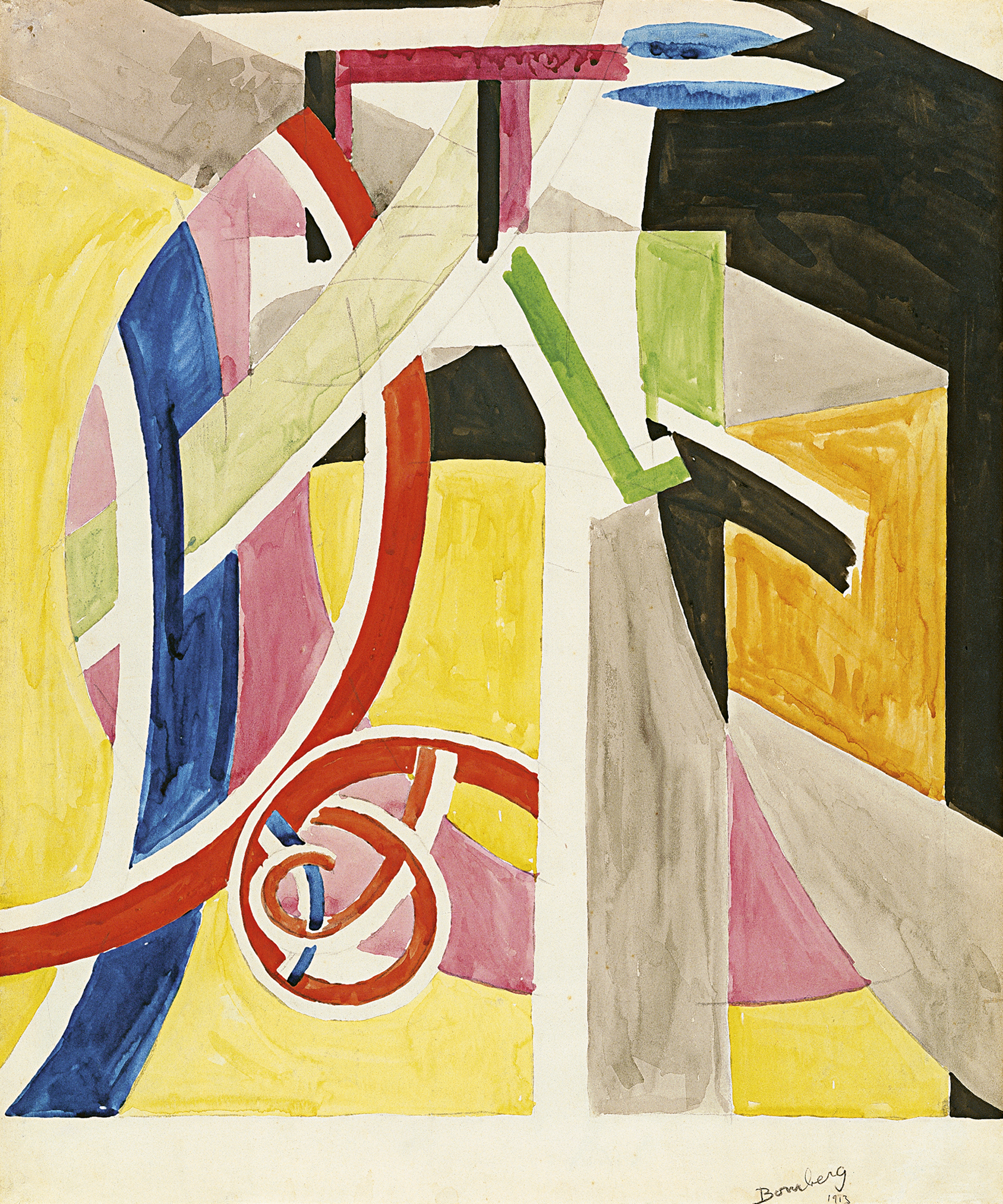
David Bomberg [5 Dez 1890 – 19 Ago 1957] – ‘La Bailarina’, 1913
Museo Nacional Thyssen-Bornemisza, Madrid
El tema de la danza, que aparece en esta composición de la colección Thyssen-Bornemisza, siempre le interesó de manera especial. Tanto las primeras actuaciones de los ballets rusos de Diághilev en Londres a partir de 1911, como su noviazgo con Sonia Cohen, una gran aficionada al baile, o el hecho de que su primera mujer, Alice Mayes, trabajara con la compañía de ballet Kosslov, influyeron sin duda en la realización de una serie dedicada a la danza entre 1913 y 1915. En esta acuarela, de líneas sinuosas, quizás una de las primeras sobre este tema, Bomberg parece explotar los ritmos del movimiento de una bailarina en el espacio y constituye un importante ejemplo del lirismo de estas tempranas abstracciones del pintor. Paloma Alarcó, Museo Thyssen.
Do álbum The Dave Brubeck Quartet – Time Out [1959], o tema Pick Up Sticks, gravado a 18 Agosto 1959.
Frederico II, ‘o Grande’ [24 Janeiro 1712, Berlim – 17 Agosto 1786, Potsdam]
Paul Signac [11 Nov 1863 – 15 Ago 1935], participou em 1884 na criação da Société des Artistes Indépendants, da qual viria a tornar-se presidente em 1908. Em Paris, conheceu Georges Seurat, com quem desenvolveu o neo-impressionismo.

Paul Signac – Port-en Bessin, la Plage [1884]
Museu Thyssen, Madrid
Do álbum ‘Art Blakey – A Night in Tunisia / Like Someone in Love’ [1960], o tema ‘Like Someone In Love’, gravado nos Estúdios de Rudy Van Gelder em 14 Agosto 1960.
Em Morente – Sueña La Alhambra [2005], Enrique Morente, um dos grandes de Espanha, canta ‘Donde Habite El Olvido’ do poeta Luís Cernuda, acompanhado pela filha Estrella Morente e pela guitarra de Pat Metheny, que hoje completa 65 anos.
É um tema maravilhoso!
Juan Habichuela [Granada, 12 Agosto 1933 – Madrid, 30 Junho 2016], oriundo de uma família de notáveis guitarristas de flamenco, participa no tema ‘Taranto Veneno’.
«Os portugueses ousaram cometer o grande mar oceano, descobriram novas ilhas, novas terras, novos mares, novos povos, e o que mais é: novo céu, novas estrelas.»
Pedro Nunes [Alcácer do Sal, 1502 — Coimbra, 11 de Agosto de 1578]


| S | T | Q | Q | S | S | D |
|---|---|---|---|---|---|---|
| 1 | ||||||
| 2 | 3 | 4 | 5 | 6 | 7 | 8 |
| 9 | 10 | 11 | 12 | 13 | 14 | 15 |
| 16 | 17 | 18 | 19 | 20 | 21 | 22 |
| 23 | 24 | 25 | 26 | 27 | 28 | 29 |
| 30 | 31 | |||||


 Visita Guiada é um programa de televisão e de rádio que dá a conhecer o Património Cultural português.


 António Branco Almeida
 Ana Margarida Lopes


 O Universo Numa Casca de Noz