2010 – Côa Valley Odyssey
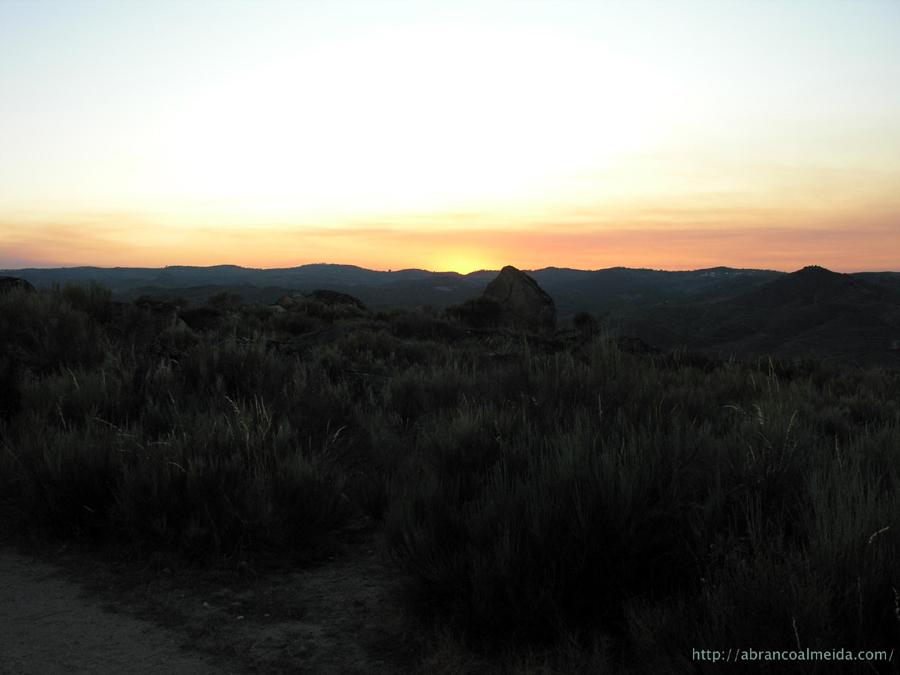
2010 - Côa Valley Odyssey - Creative Visualization
Archive for the ‘ UNCN ’ Category
2010 - Côa Valley Odyssey - Creative Visualization
Os sábados musicais são enriquecidos com o Musica Aeterna, de autoria de João Chambers.
A emissão de hoje é dedicada a Claudio Monteverdi (1567-1643) e a Selva morale e spirituale, a primeira antologia de música sacra a ser publicada após as monumentais “Vésperas” de 1610.
Podcast de 05-09-2009
Do repertório sacro do teórico e homem de leis Johann David Heinichen (1683-1729), uma das grandes figuras do alto barroco alemão, destaco a Missa Nr 11 – Dixit Dominus, datada de 1728 e uma das criações mais tardias de Heinichen.
Esta obra foi executada pela Kammerchor Dresden e dirigida por Hans Christoph Rademann (biografia).

O universo deixa ver o futuro à transparência - Einstein. Museu Nacional do Azulejo
GOING ON MEANS GOING FAR, GOING FAR MEANS RETURNING
O efeito Doppler também se verifica com as ondas de luz. Se uma galáxia permanecesse a uma distância constante da Terra, as suas riscas espectrais estariam onde esperaríamos vê-las. Se, no entanto, a galáxia estiver a afastar-se de nós, as ondas de luz estarão a ser esticadas e o espectro aparecerá desviado para o vermelho. Se a galáxia estiver a aproximar-se de nós, as ondas serão comprimidas e o espectro desviar-se-á para o azul.

Hubble descobriu que muitas manchas luminosas de fraca intensidade eram na verdade outras galáxias. Para parecerem tão pequenas e ténues, teriam de estar tão longe que a sua luz teria demorado milhões de anos a chegar até nós. Mas a descoberta mais surpreendente foi que as galáxias se afastavam de nós e, quanto mais longe se encontravam, mais depressa se afastavam, o que o levou a concluir que deveriam ter estado mais juntas no passado.
Assim se explica por que o céu é escuro à noite: nenhuma estrela pode estar a brilhar há mais de 10 a 15 mil milhões de anos, a idade do big bang.
Significa isto que um dia deixaremos de ver as estrelas? Como vamos sonhar?
Aproveitando a efeméride, aqui ficam os apontamentos recolhidos na aula do Professor Henrique Leitão, no Museu do Oriente.

Em Setembro de 1608, o holandês Hans Lipperhey anuncia um artefacto revolucionário em forma de tubo, que combinava um par de lentes gémeas e permitia ver com nitidez pessoas e coisas situadas a várias centenas de metros de distância e que, por isso, teria grande utilidade para fins militares; Duas semanas mais tarde, outros dois holandeses, Jacob Metius e Zacharias Janssen, apresentaram objectos semelhantes.
As notícias chegaram a Galileu que, engenhoso como era, se documentou devidamente e não se limitou a copiar, fez muito melhor. Galileu passou os três anos seguintes a efectuar observações telescópicas, período em que escreveu Sidereus Nuncius (1610).
Ptolomeu estava errado!
” A Lua é uma pedra! Nós até aqui não sabíamos nada! Júpiter tem satélites! Saturno não é nada redondo! Vénus anda à volta do Sol!
Galileu em Portugal
 Importa recuar algumas décadas para perceber a importância da Rede Administrativa da Companhia de Jesus enquanto veículo de transmissão do conhecimento científico da época, nomeadamente na divulgação das descobertas de Galileu entre os Chineses. Os jesuítas portugueses eram em número muito inferior em relação aos outros jesuítas europeus, mas tinham de missionar áreas muito mais vastas, como o Brasil.
No Colégio de Santo Antão (1553), onde é hoje o Hospital de São José, era leccionada a famosa Aula da Esfera, onde se revia aprofundadamente a cosmologia da época. Ora, os professores jesuítas, em contacto constante com o Colégio Romano e os centros científicos da época, não podiam deixar de estar a par das grandes polémicas cosmológicas da altura. Devido à situação de Lisboa no trânsito de missionários, alguns dos mais competentes professores do Colégio Romano, tais como Christopher Grienberger, vieram por algum tempo para Portugal, com o objectivo de ensinar no Colégio de Santo Antão.
Para se ter um ideia da importância da instituição na época em Portugal, note-se que em 1759 havia 20 mil alunos jesuítas, o que, depois de Pombal, só voltou a verificar-se cerca de 150 anos mais tarde; Em Coimbra, não havia professores de matemática capazes, enquanto que o Colégio acolhia dos melhores professores estrangeiros.
A missionar na Índia, o Padre Giovanni Antonio Rubino, que partira de Lisboa para Macau em 1602, dizia em Novembro de 1612 sobre os famosos telescópios:
“Mandem-me as instruções, que aqui arranjarei quem os produza!”
Galileu na China (1609-1618) – Tribunal das Matemáticas conta com a presença de jesuítas com treino avançado:
O grande objectivo das missões dos jesuítas era a evangelização da China, iniciada por Matteo Ricci (1552-1610), um italiano de famílias nobres que tinha partido para o Oriente em 1578, equipado de uma vasta cultura científica. Ricci percebera o grande interesse chinês pelos conhecimentos científicos que os ocidentais possuíam e foi o primeiro europeu a conseguir conquistar a confiança de altos dignitários do Império do Meio. Na sua esteira, os missionários jesuítas, muitos dos quais portugueses, conseguiram pouco a pouco ter uma posição influente em Pequim, chegando a presidir ao Tribunal das Matemáticas, que era um conselho imperial para matérias científicas, nomeadamente para a organização do calendário, para a previsão de eclipses e para a observação astronómica. Na sua correspondência com o Vaticano, Ricci e os seus companheiros insistiam frequentemente na importância da ciência.
«Enviem-nos matemáticos!», pedia Ricci, «enviem-nos livros!»
Manuel Dias – Pequim, 1614: As primeiras notícias sobre Saturno, contadas na China por um português, abriram uma notável discussão sobre astronomia.
O padre Manuel Dias publicou na China o «Tien wen lueh», descrevendo já as observações astronómicas que Galileu tinha feito em 1609 e 1610. Numa altura em que as cartas de Pequim para Roma chegavam a demorar oito anos a chegar ao destino, quatro anos bastaram, mesmo com os longos meses da carreira da Índia, somados à paragem em Goa e aos meses da viagem até Macau, para que a Companhia de Jesus tivesse feito chegar ao Oriente as mais recentes e mais polémicas observações científicas da época.
Giovanni Paolo Lembo (1570?-1618), que ensinou no Colégio de Santo Antão a Aula da Esfera entre 1615 e 1617, promoveu a discussão das observações das Fases de Vénus, no sentido de provar que Vénus girava em torno do Sol.
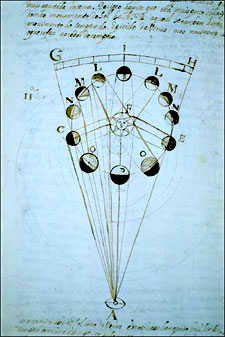 G. P. Lembo tinha construído em 1610 os telescópios do Colégio Romano e tinha subscrito o célebre parecer de quatro matemáticos de 1611, documento que tinha confirmado às autoridades eclesiásticas a justeza das observações de Galileu.
Deixou-nos instruções sobre como se construir um telescópio, ou longemira, como se designava na época.
Enquanto que no resto da Europa a comunidade científica pouco ênfase ia dando ao assunto, na China e no Japão o telescópio acolhia grande entusiasmo.
Em 1759, os Jesuítas foram expulsos de Portugal…

Praia dos Machados - Zambujeira do Mar
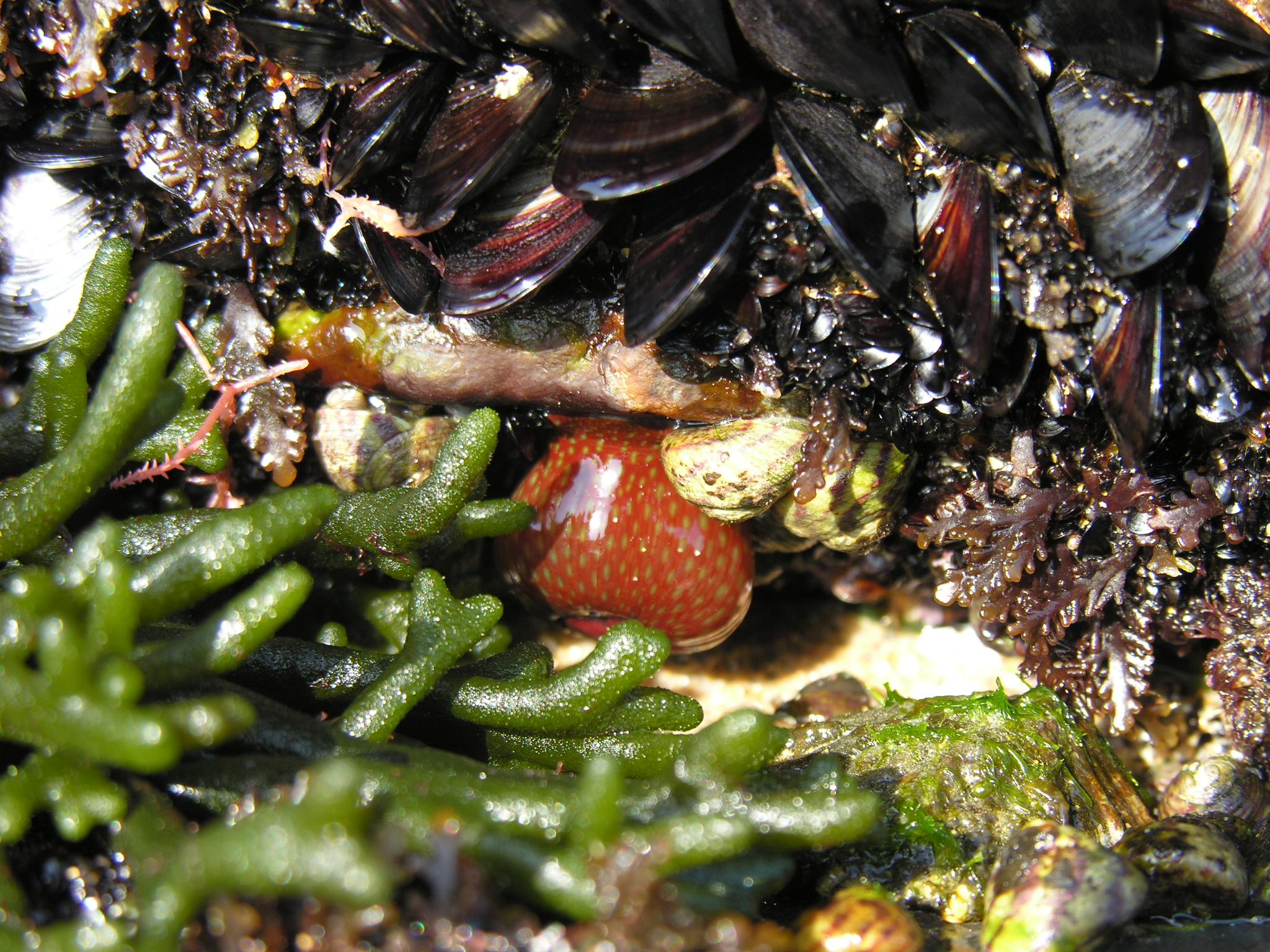
Praia dos Machados - Zambujeira do Mar
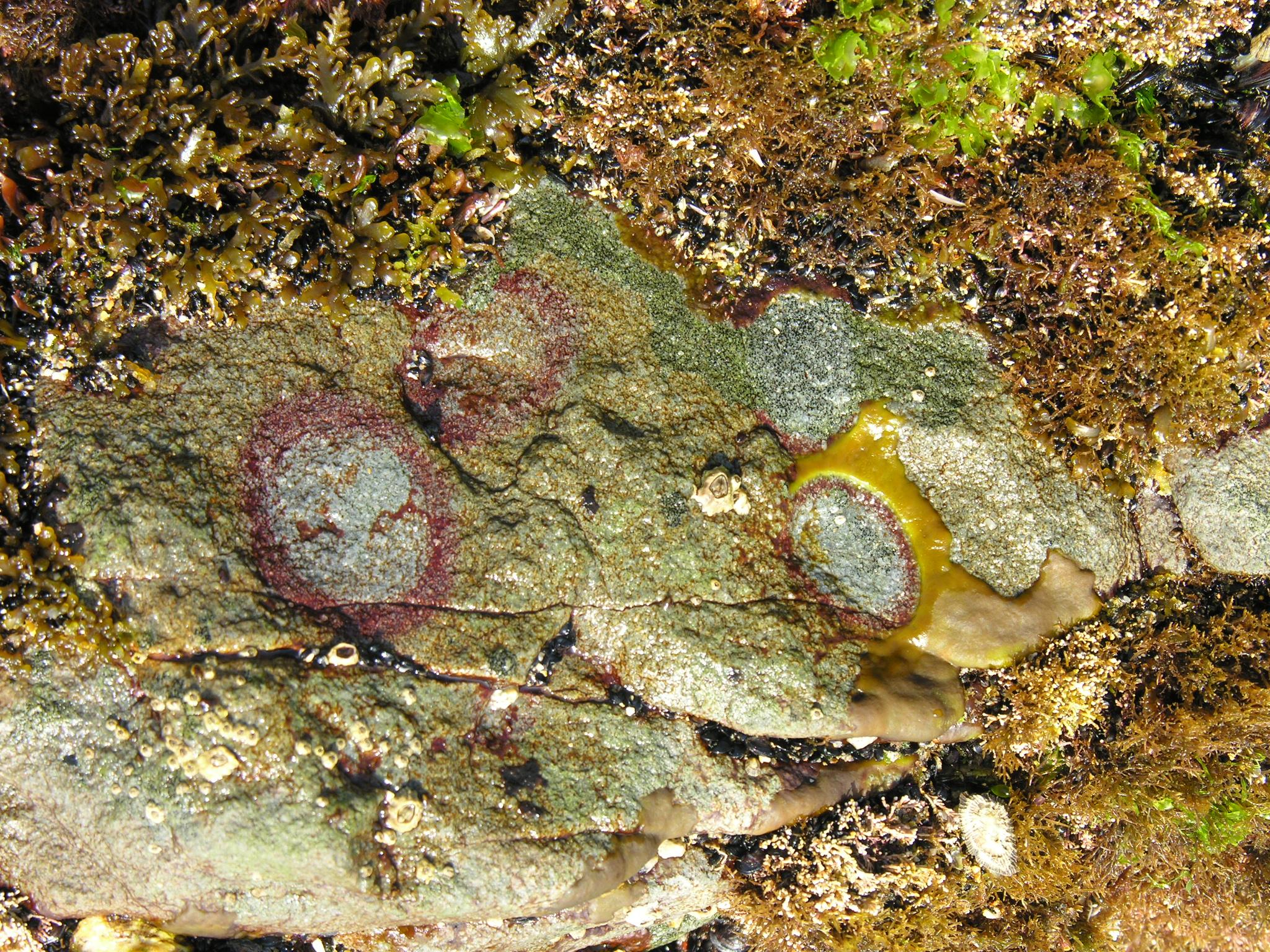
Praia dos Machados - Zambujeira do Mar
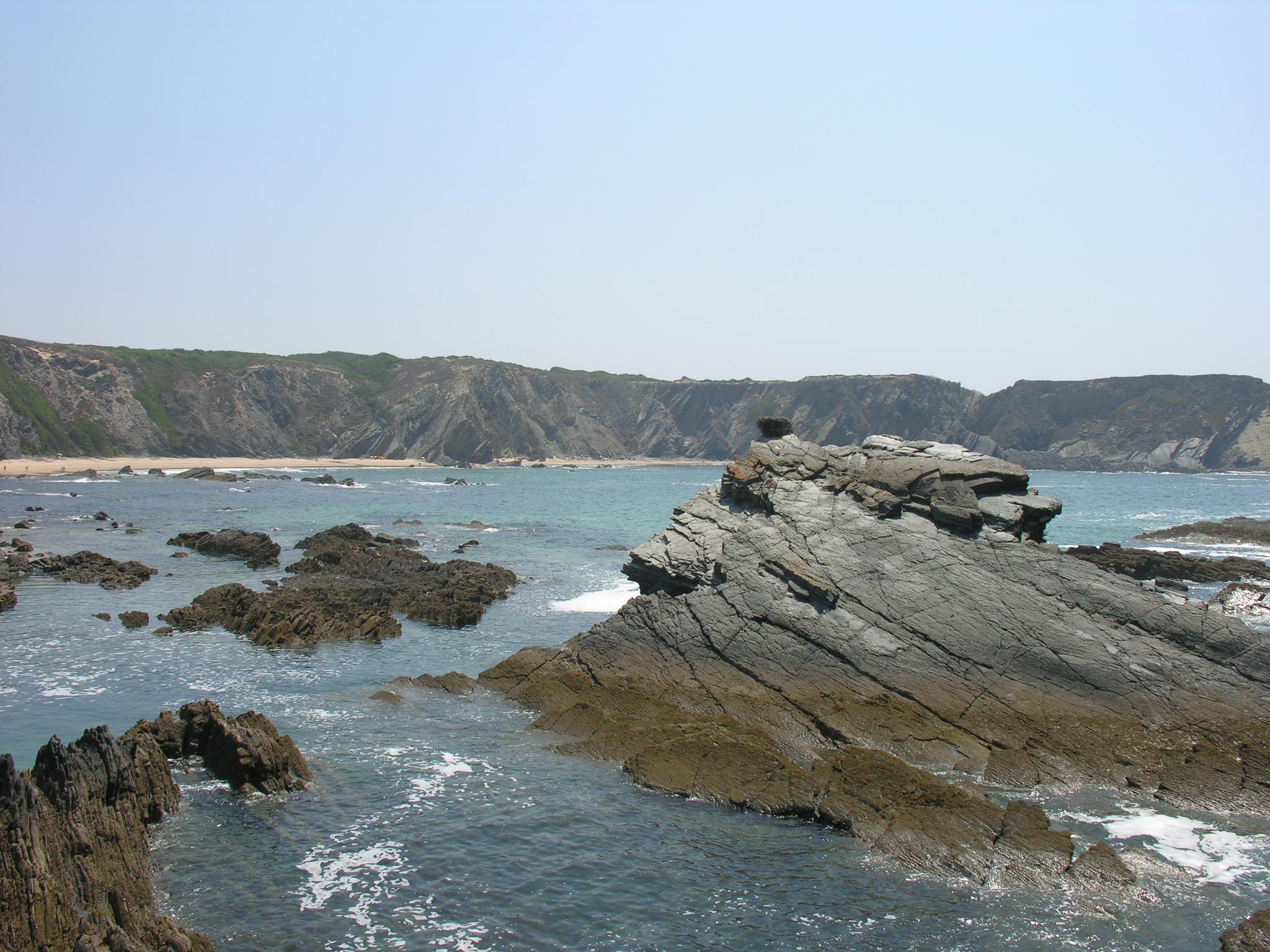
Praia dos Machados - Zambujeira do Mar
O ex-astronauta americano Neil Armstrong nasceu a 5 de Agosto de 1930. Tinha 38 quando se tornou mundialmente famoso: o módulo lunar Eagle levou os primeiros homens à superfície da Lua em 1969 e Armstrong transmitiu para a Terra a frase que marcou o mais famoso pequeno passo de sempre. Antes de trabalhar para a Nasa, Armstrong esteve na Marinha americana e participou na Guerra da Coreia. Terminado o serviço na Marinha, concluiu os estudos, licenciou-se em Engenharia Aeronáutica e encontrou trabalho como piloto de testes numa base aérea. Nessa altura, pilotou um avião experimental que abriu caminho à exploração espacial: o aparelho ultrapassava os 60 quilómetros de altitude (um avião comercial voa a cerca de 11) e serviu como rampa de lançamento para a construção de foguetões. Em 1962, Armstrong tornou-se astronauta e quatro anos depois participou pela primeira vez numa missão espacial. Em 1969, juntamente com Buzz Aldrin e Michael Collins (que não pisou solo lunar), o astronauta (…) protagonizou a ida à Lua. Logo no ano seguinte, saiu da Nasa, fez um mestrado e foi professor na Universidade de Cincinnati, nos EUA, durante oito anos. Tal como a maioria dos restantes astronautas que viveram a euforia da corrida espacial, Armstrong é um forte defensor da ida do Homem a Marte. Nos anos recentes, reduziu ao mínimo as suas aparições públicas. Via.

From a 2006 NASA News article - In red, David Hathaway's predictions for the next two solar cycles and, in pink, Mausumi Dikpati's prediction for cycle 24, and the expected "low" cycle
Maximum activity in May 2013
The Sun perked up in June and July, with a sizeable clump of 20 sunspots earlier this month.
Now it is blank again, consistent with expectations that this solar cycle will be smaller and calmer, and the maximum of activity, expected to arrive in May 2013 will not be all that maximum.
For operators of satellites and power grids, that is good news. The same roiling magnetic fields that generate sunspot blotches also accelerate a devastating rain of particles that can overload and wreck electronic equipment in orbit or on Earth.
A panel of 12 scientists assembled by the National Oceanic and Atmospheric Administration now predicts that the May 2013 peak will average 90 sunspots during that month. That would make it the weakest solar maximum since 1928, which peaked at 78 sunspots.
During an average solar maximum, the Sun is covered with an average of 120 sunspots.
But the panel’s consensus “was not a unanimous decision,” said Douglas A. Biesecker, chairman of the panel. One member still believed the cycle would roar to life while others thought the maximum would peter out at only 70.
Among some global warming skeptics, there is speculation that the Sun may be on the verge of falling into an extended slumber similar to the so-called Maunder Minimum, several sunspot-scarce decades during the 17th and 18th centuries that coincided with an extended chilly period.
Most solar physicists do not think anything that odd is going on with the Sun. With the recent burst of sunspots, “I don’t see we’re going into that,” Dr. Hathaway said last week.
Still, something like the Dalton Minimum — two solar cycles in the early 1800s that peaked at about an average of 50 sunspots — lies in the realm of the possible, Dr. Hathaway said. (The minimums are named after scientists who helped identify them: Edward W. Maunder and John Dalton.)
With better telescopes on the ground and a fleet of Sun-watching spacecraft, solar scientists know a lot more about the Sun than ever before. But they do not understand everything. Solar dynamo models, which seek to capture the dynamics of the magnetic field, cannot yet explain many basic questions, not even why the solar cycles average 11 years in length.
Predicting the solar cycle is, in many ways, much like predicting the stock market. A full understanding of the forces driving solar dynamics is far out of reach, so scientists look to key indicators that correlate with future events and create models based on those.
For example, in 2006, Dr. Hathaway looked at the magnetic fields in the polar regions of the Sun, and they were strong. During past cycles, strong polar fields at minimum grew into strong fields all over the Sun at maximum and a bounty of sunspots. Because the previous cycle had been longer than average, Dr. Hathaway thought the next one would be shorter and thus solar minimum was imminent. He predicted the new solar cycle would be a ferocious one.
Instead, the new cycle did not arrive as quickly as Dr. Hathaway anticipated, and the polar field weakened. His revised prediction is for a smaller-than-average maximum. Last November, it looked like the new cycle was finally getting started, with the new cycle sunspots in the middle latitudes outnumbering the old sunspots of the dying cycle that are closer to the equator.
After a minimum, solar activity usually takes off quickly, but instead the Sun returned to slumber. “There was a long lull of several months of virtually no activity, which had me worried,” Dr. Hathaway said.
The idea that solar cycles are related to climate is hard to fit with the actual change in energy output from the sun. From solar maximum to solar minimum, the Sun’s energy output drops a minuscule 0.1 percent.
But the overlap of the Maunder Minimum with the Little Ice Age, when Europe experienced unusually cold weather, suggests that the solar cycle could have more subtle influences on climate.
Of cosmic rays
One possibility proposed a decade ago by Henrik Svensmark and other scientists at the Danish National Space Center in Copenhagen looks to high-energy interstellar particles known as cosmic rays. When cosmic rays slam into the atmosphere, they break apart air molecules into ions and electrons, which causes water and sulfuric acid in the air to stick together in tiny droplets. These droplets are seeds that can grow into clouds, and clouds reflect sunlight, potentially lowering temperatures.
The Sun, the Danish scientists say, influences how many cosmic rays impinge on the atmosphere and thus the number of clouds. When the Sun is frenetic, the solar wind of charged particles it spews out increases. That expands the cocoon of magnetic fields around the solar system, deflecting some of the cosmic rays.
But, according to the hypothesis, when the sunspots and solar winds die down, the magnetic cocoon contracts, more cosmic rays reach Earth, more clouds form, less sunlight reaches the ground, and temperatures cool.
“I think it’s an important effect,” Dr. Svensmark said, although he agrees that carbon dioxide is a greenhouse gas that has certainly contributed to recent warming.
Dr. Svensmark and his colleagues found a correlation between the rate of incoming cosmic rays and the coverage of low-level clouds between 1984 and 2002. They have also found that cosmic ray levels, reflected in concentrations of various isotopes, correlate well with climate extending back thousands of years.
But other scientists found no such pattern with higher clouds, and some other observations seem inconsistent with the hypothesis.
Terry Sloan, a cosmic ray expert at the University of Lancaster in England, said if the idea were true, one would expect the cloud-generation effect to be greatest in the polar regions where the Earth’s magnetic field tends to funnel cosmic rays.
“You’d expect clouds to be modulated in the same way,” Dr. Sloan said. “We can’t find any such behavior.”
Still, “I would think there could well be some effect,” he said, but he thought the effect was probably small. Dr. Sloan’s findings indicate that the cosmic rays could at most account for 20 percent of the warming of recent years.
Even without cosmic rays, however, a 0.1 percent change in the Sun’s energy output is enough to set off El Niño- and La Niña-like events that can influence weather around the world, according to new research led by the National Center for Atmospheric Research in Boulder, Colo.
Climate modeling showed that over the largely cloud-free areas of the Pacific Ocean, the extra heating over several years warms the water, increasing evaporation. That intensifies the tropical storms and trade winds in the eastern Pacific, and the result is cooler-than-normal waters, as in a La Niña event, the scientists reported this month in the Journal of Climate.
In a year or two, the cool water pattern evolves into a pool of El Niño-like warm water, the scientists said.
New instruments should provide more information for scientists to work with. A 1.7-meter telescope at the Big Bear Solar Observatory in Southern California is up and running, and one of its first photographs shows “a string of pearls,” each about 50 miles across.
“At that scale, they can only be the fundamental fibril structure of the Sun’s magnetic field,” said Philip R. Goode, director of the solar observatory. Other telescopes may have caught hints of these tiny structures, he said, but “never so many in a row and not so clearly resolved.”
Sun-watching spacecraft cannot match the acuity of ground-based telescopes, but they can see wavelengths that are blocked by the atmosphere — and there are never any clouds in the way. The National Aeronautics and Space Administration’s newest sun-watching spacecraft, the Solar Dynamics Observatory, which is scheduled for launching this fall, will carry an instrument that will essentially be able to take sonograms that deduce the convection flows generating the magnetic fields.
That could help explain why strong magnetic fields sometimes coalesce into sunspots and why sometimes the strong fields remain disorganized without forming spots. The mechanics of how solar storms erupt out of a sunspot are also not fully understood.
A quiet cycle is no guarantee no cataclysmic solar storms will occur. The largest storm ever observed occurred in 1859, during a solar cycle similar to what is predicted.
Back then, it scrambled telegraph wires. Today, it could knock out an expanse of the power grid from Maine south to Georgia and west to Illinois. Ten percent of the orbiting satellites would be disabled. A study by the National Academy of Sciences calculated the damage would exceed a trillion dollars.
But no one can quite explain the current behavior or reliably predict the future.
“We still don’t quite understand this beast,” Dr. Hathaway said. “The theories we had for how the sunspot cycle works have major problems.”
Esta é uma imagem espectacular da cratera situada no cimo do Monte Olimpus em Marte, o vulcão mais alto do Sistema Solar. O Monte Olimpus tem uma altura de 27 km e uma extensão de quase 600 km.
A sua cratera possui uma profundidade de cerca de 3 km. Esta imagem, obtida pela sonda Mars Express da ESA, foi tirada a partir de uma altitude de 273 km no dia 21 de Janeiro de 2004 e cobre cerca de 102 km de extensão. Via.

ESA - Monte Olimpus visto pela Mars Express - 21 de janeiro de 2004
Durante 40 anos estive convencido que as imagens da alunagem da Apollo 11 foram transmitidas em diferido, pela razão de as ter visto só no dia seguinte; Até que, esta semana no Twitter, Vasco Matos Trigo teve a gentileza de me esclarecer que A RTP transmitiu em directo, com imagens cedidas através na cadeia japonesa. Foi durante a madrugada, numa emissão conduzida pelo José Mensurado.
Uma coisa é certa: Não me conseguem convencer – depois de ter visto aquelas imagens e de seguida ter ido a correr para a janela – que os tipos que vi aos pulinhos no Mar da Tranquilidade não eram Buzz Aldrin e Neil Armstrong!
Ao longo dos últimos dias, tem sido uma aventura acompanhar a viagem. Vale a pena espreitar!


| S | T | Q | Q | S | S | D |
|---|---|---|---|---|---|---|
| 1 | 2 | 3 | 4 | 5 | ||
| 6 | 7 | 8 | 9 | 10 | 11 | 12 |
| 13 | 14 | 15 | 16 | 17 | 18 | 19 |
| 20 | 21 | 22 | 23 | 24 | 25 | 26 |
| 27 | 28 | 29 | 30 | |||


 Visita Guiada é um programa de televisão e de rádio que dá a conhecer o Património Cultural português.

 António Branco Almeida
 Ana Margarida Lopes

 O Universo Numa Casca de Noz