Archive for the ‘ Pintura ’ Category

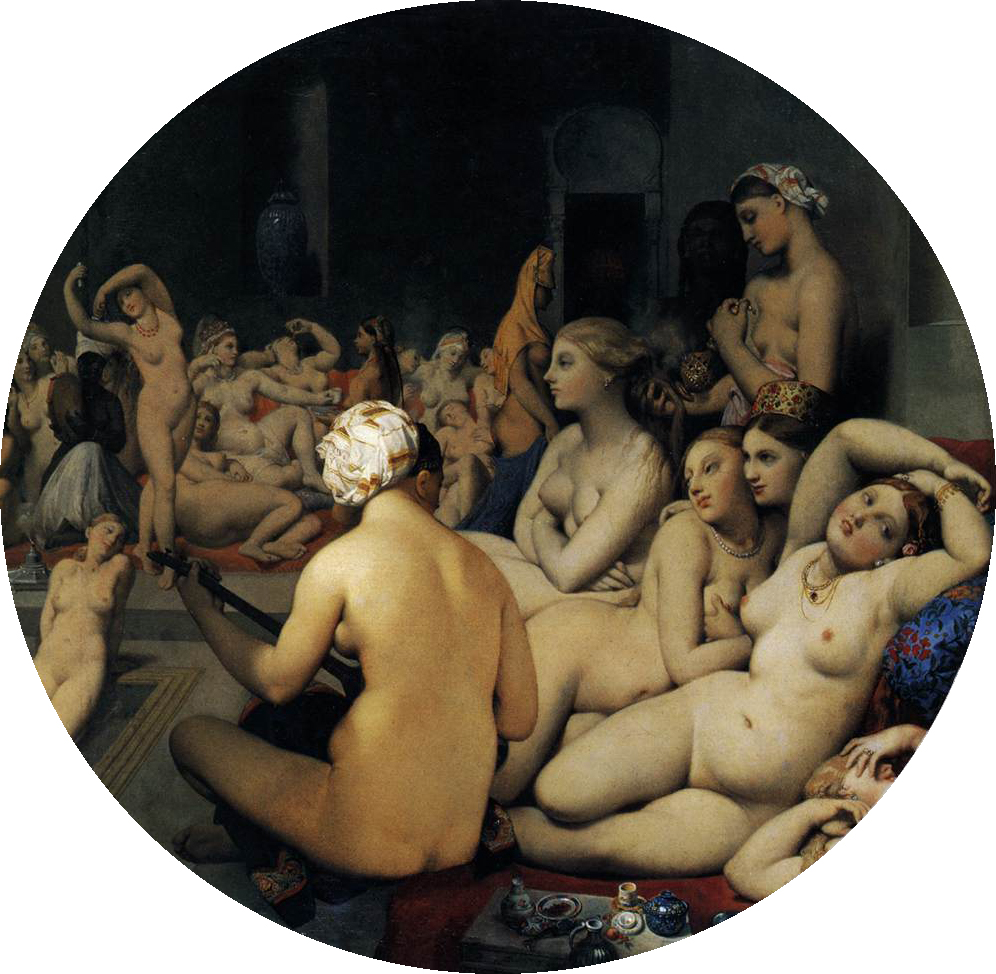
O Banho Turco

Nesta obra-prima realizada nos últimos anos de vida, Jean-Auguste-Dominique Ingres ( 1780-1867) retoma as banhistas e odaliscas dos primeiros anos. Os motivos para estas formas femininas idealizadas que vivem apenas para a beleza e prazer, são baseados em relatos pormenorizados do oriente – descrições sobre os banhos no harém de Maomé – e as cartas onde Lady Montagu descreve os banhos turcos.

Pela beleza abstracta, a magnífica pele branca como leite, as formas graciosas dos seus corpos e os seus cabelos e pela sua sensualidade, as banhistas possuem uma inocência paradisíaca, sem gestos ou comportamentos indecorosos entre si.
A beleza intangível das mulheres – suspensa no tempo – é obtida com grande economia de meios, através dos subtis jogos de luz que lhes moldam as formas e a pele.

“Quanto mais simples forem as formas, maior a beleza e a força.”

Jean Auguste Dominique Ingres – O Banho Turco, 1862

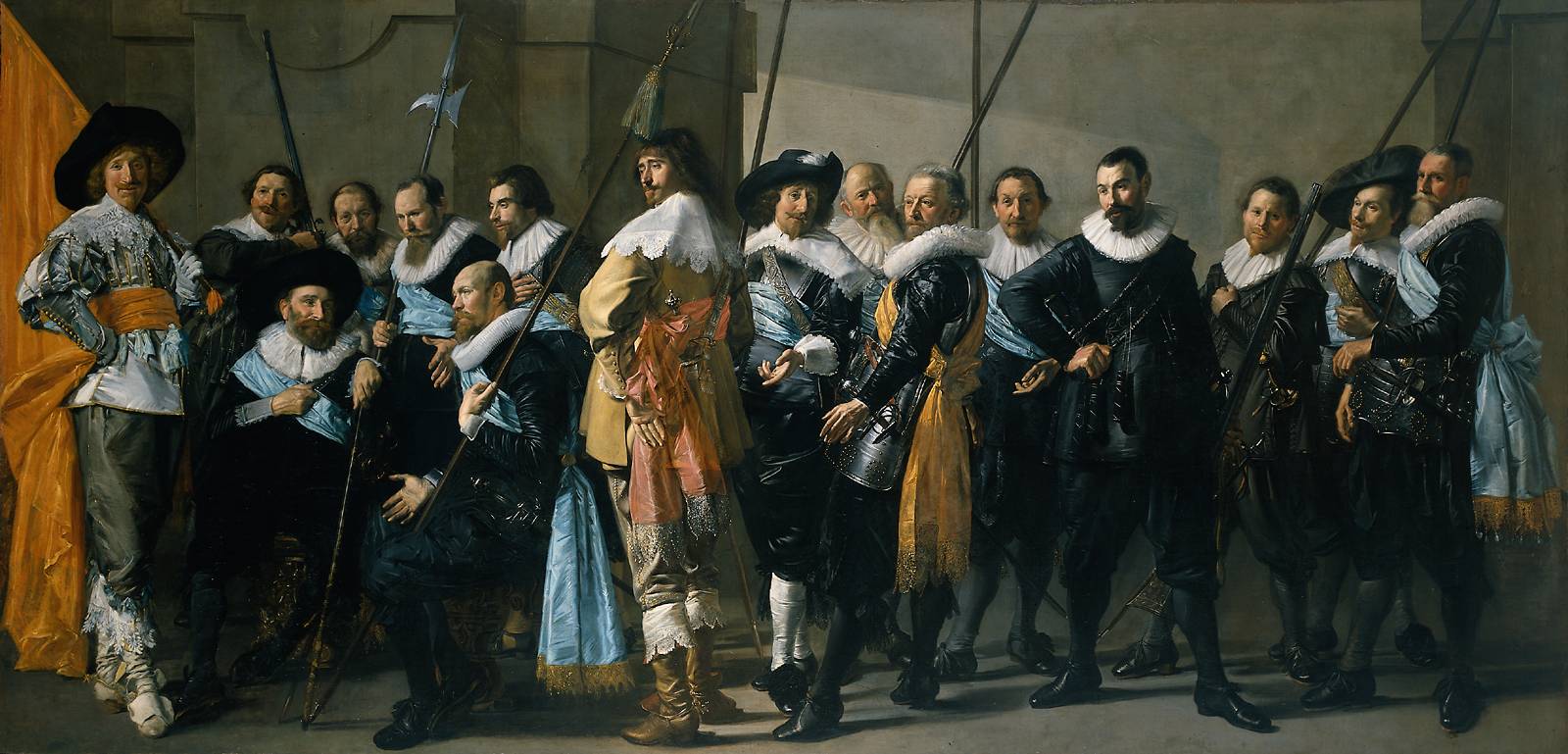
A Companhia do Capitão Reinier Reael

Cedida pelo Rijksmuseum ao Museu do Prado (3 de Dezembro de 2009 a 28 de Fevereiro de 2010), a obra-prima Companhia do Capitão Reinier Reael de Franz Hals e Pieter Codde, datada de 1637, é representativa dos retratos de milícias, género característico da pintura holandesa do século XVII.
Jan van Dijk alcunhou-a de Companhia Magra, devido à elegância dos militares.

Franz Hal y Pieter Codde - a compañía del capitán Reael, 1637

‘Just to see that painting would make the journey to Amsterdam worthwhile.’ wrote Vincent van Gogh in 1885, after having seen this work in the Rijksmuseum. He particularly liked the ‘orange banner in the left corner,’ he had ‘seldom seen a more divinely beautiful figure’. The painting that caused such a sensation was the group portrait of the crossbowmen’s militia under Captain Reinier Reael, painted by Frans Hals and Pieter Codde in 1637. The painting has been known for centuries as the ‘Meagre Company’, because the figures portrayed all appear remarkably thin.
Commuter
In 1633 Frans Hals was commissioned to paint the portraits of Captain Reynier Reael and Lieutenant Cornelis Michielsz. Blaeuw with their militia unit. He had to paint the picture in Amsterdam, where the militiamen lived. Hals himself lived in Haarlem; which meant that he had to travel back and forth regularly.
The Amsterdam civic guard had asked Frans Hals because of his reputation for lively civic guard portraits, and because he avoided staid, formally posed group portraits. But the militiamen could not have taken into account that Hals might start to find commuter travel tedious.
Expenses
When, after three years, only half the painting was ready, the militiamen demanded that Hals complete the painting in ten days, otherwise he wouldn’t receive a cent. Despite the excellent fee – 1,025 guilders – he refused. Let the militiamen come to Haarlem, was Hals’s his reply. He had already spent
far too much time and money in Amsterdam, without receiving any travel or accommodation expenses. He had ‘wasted much in Aemstelredamme in the tavern’, as he explained to the crossbowmen in a letter.
Pieter Codde
Hals’s clients refused to go to Haarlem. They looked for another painter to complete the work and found the Amsterdammer Pieter Codde. Finishing a canvas of this magnitude was no easy task for Codde, who usually worked in small formats with great precision.
The left side, up to the figure in light clothes in the centre, is by Frans Hals. He also painted most of the hands and faces. The rest is by Pieter Codde.
Rough and smooth
Although he tried to adapt to Hals’s style, Codde’s half is clearly less powerful, it is smoother and more precise and therefore less profound. The rendering of the various textures provides an excellent illustration.
While Hals’s brushstrokes are clearly defined, Codde’s brushwork is hardly visible. This is clear from a comparison of the black in the clothes of two officers, one by Codde and one by Hals.
Fashionable
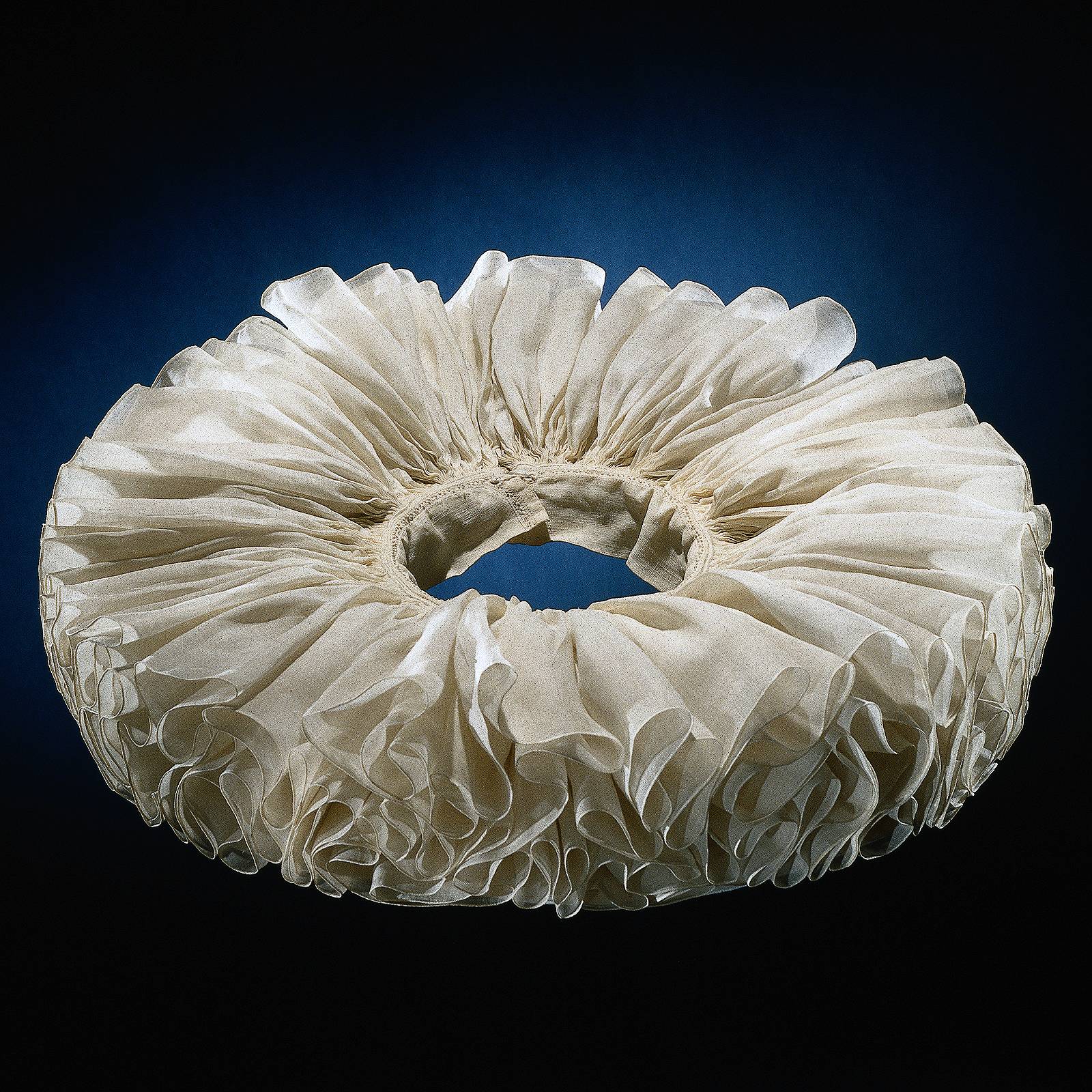
Captain Reael’s men are wearing all the various fashions of the mid-seventeenth century, from conservative black broadcloth garments to bright, light-yellow costumes. Two figures are elegantly portrayed in light, glistening fabrics with a profusion of lace: the ensign on the left and the lieutenant in the centre. They are wearing sashes in the ‘club colours’ of their company: orange. The crossbowmen are also wearing different models of collar: millstone ruffs, simple surreptitious collars and large flat collars. They were made of delicate lace and never lasted very long. They only surviving example of a seventeenth-century collar is in the Rijksmuseum collection.

A real seventeenth-century collar

A real seventeenth-century collar
This collar is made of particularly fine batiste or cambric. As the name suggests, the material originally came from the Flemish town of Kamerijk or Cambrai. It was introduced to the Northern Netherlands by the Flemish refugees who arrived in the late sixteenth century. Haarlem weavers specialised in the fabric. Because of its shape, this kind of collar was known as a millstone ruff. These became fashionable in the second half of the sixteenth century under the influence of the Spanish rulers. Early millstone ruffs were starched with regular pleats. This example, however, is looser and less tidy. It is of a type that was popular with young, fashionable men around 1615 to 1635. This is the only surviving pleated ruff in the world. Via.

Os Músicos, de Caravaggio

Neste The Musicians do pintor Caravaggio (1571-1610) – de quem no próximo ano se assinalam os quatrocentos anos da morte -, as duas figuras vistas de frente são indubitavelmente retratos, o que limita uma análise convencional da cena no âmbito nobre e clássico da composição, centrada entre a figura do tocador de alaúde e a figura recuada. O rosto entre ambos é de Caravaggio e  figura da esquerda é de uma composição anterior (Jovem descascando uma pêra) da qual só existem cópias.

Caravaggio – The Musicians, 1595-96 (Metropolitan Museum of Art, New York)

Para acompanhar, um Madrigal de Thomas Morley (1557 – 1602), músico e organista inglês do período renascentista.

Édipo e a Esfinge

Jean-Auguste Ingres e Francis Bacon lado a lado no Museu Berardo

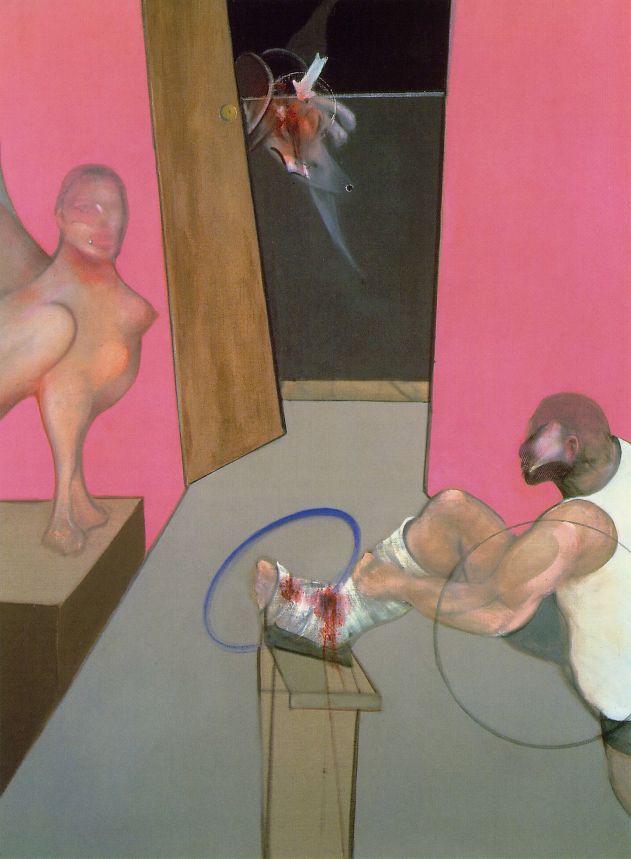
Em 1983, Francis Bacon (1909-1992) inspirou-se numa composição do famoso pintor francês Jean Auguste-Dominique Ingres (1780-1867) sobre o tema mitológico do diálogo entre Édipo e a Esfinge. O empréstimo excepcional do Musée du Louvre tornará possível a confrontação entre a obra de Ingres, Oedipus and the Sphynx (iniciada em 1808 mas alterada para ser exposta no Salon em 1827) e a obra de Francis Bacon – Oedipus and the Sphinx (after Ingres) – 1983, que pertence à Colecção Berardo.

Jean Auguste-Dominique Ingres - Oedipus and the Sphynx, 1808-25
Jean Auguste-Dominique Ingres – Oedipus and the Sphynx, 1808-25 – Oil on canvas, 189 x 144 cm
Musée du Louvre, Paris

Em Oedipus Tyrannus de Sófocles,  Édipo foi ter com a Esfinge que bloqueava a estrada para Tebas e desafiava qualquer viajante a responder a um enigma ou a morrer. Édipo conseguiu resolver o enigma…

Francis Bacon - Oedipus and the Sphinx (after Ingres), 1983

Francis Bacon - Oedipus and the Sphinx (after Ingres), 1983

Scenes from the Story of the Argonauts

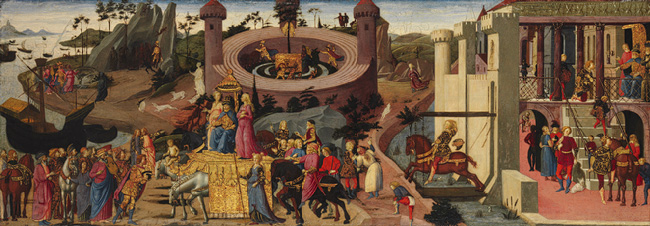
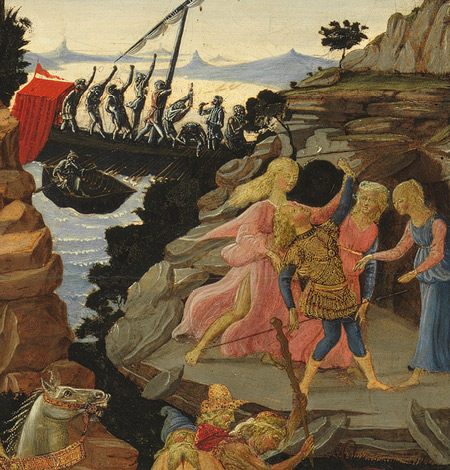
Biagio d’Antonio – Scenes from the Story of the Argonauts, ca. 1465 – Tempera on panel

Master of the Argonauts

These two panels with lively depictions of scenes from the stories of Jason and the Argonauts were designed either as the fronts of cassoni or as spalliere, hung at above shoulder height. As with other complex narrative constructions of the period, such as some of Ghiberti’s compositions for the bronze doors of the Baptistery of Florence, the stories proceed across the picture plane and in depth, and the illusionistic manipulation of space through perspective is central to their effect.
Most of the tale is told according to the epic poem Argonautica written in Greek by Apollonius of Rhodes and studied in the Medici circle. Vernacular versions supplied some of the details, and in this sense the panels resemble those painted in celebration of the Tornabuoni-Albizzi marriage some years later, to which Biagio d’Antonio also contributed.
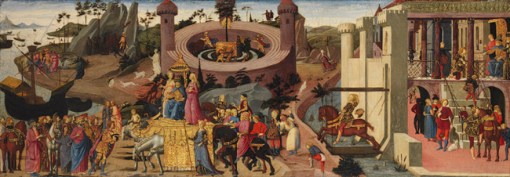
Biagio d'Antonio - Scenes from the Story of the Argonauts, ca. 1465

Panel 1: Charge of King Pelias to Jason, his nephew, to retrieve the Golden Fleece from a cave in Colchis on the Black Sea (in each scene, Jason is in golden armor, pink cloak, and winged helmet). Jason seeks adventurers to follow him. Jason and Orpheus, with his viol, consult the centaur Chiron atop Mount Pelion. Jason’s ship, the Argo, sails along the Mysian coast. Hylas, Hercules’ squire, is pulled into a pool by nymphs and never seen again. The Calydonian boar hunt at the far right is not in Apollonius’ account.

The Tale of the Argonauts (left to right):

Biagio d'Antonio - Scenes from the Story of the Argonauts, ca. 1465 (left)

Biagio d'Antonio - Scenes from the Story of the Argonauts, ca. 1465 (center)
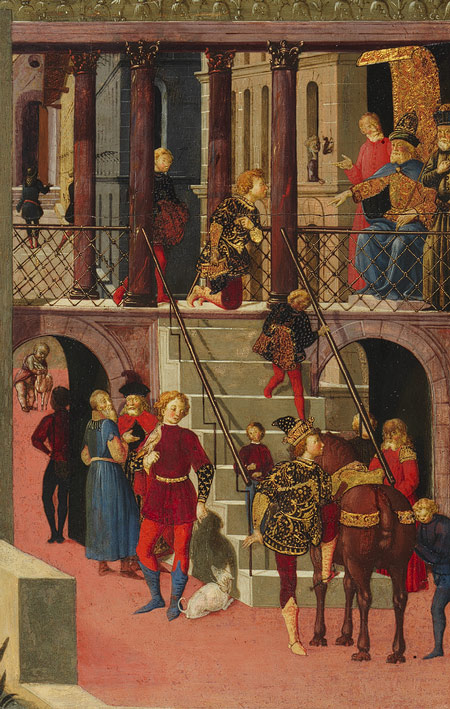
Biagio d'Antonio - Scenes from the Story of the Argonauts, ca. 1465 (right))

_________________________________________________________
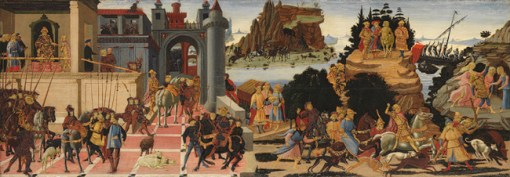
Scenes from the Story of the Argonauts, cassone panel, ca. 1465

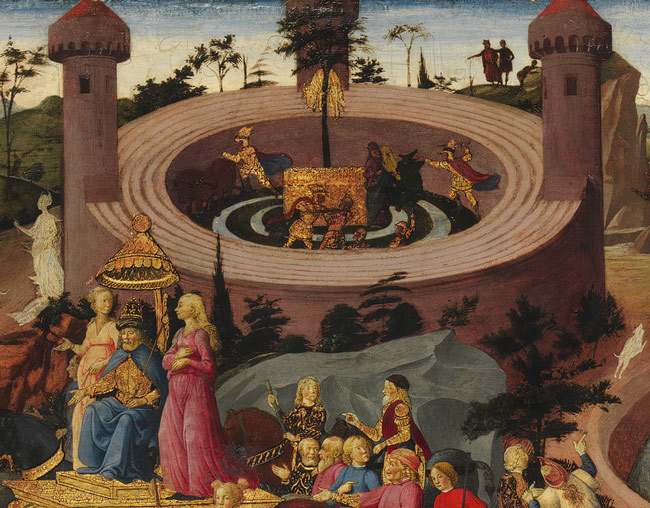
Panel 2: Jason arrives at Colchis greeted by King Aeëtes with his daughters Medea and Chalciope. Jason begins to carry out his appointed tasks under the protection of the sorceress Medea. He is able to grab the Golden Fleece from the labyrinth and flees with Medea. Aeëtes sends Medea’s brother in pursuit; he may be the young man riding in haste across the castle’s moat.

In this panel and its companion, the story of Jason and the Argonauts unfolds in a continuous narrative.
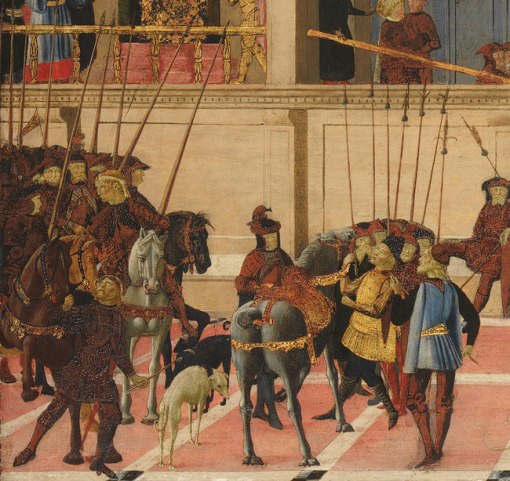
Scenes from the Story of the Argonauts, cassone panel, ca. 1465 (left)

Here, at the left, Jason is charged by King Pelias to retrieve the Golden Fleece. Jason is then shown mounting his horse, and consulting the centaur Chiron on Mount Pelion, along with Hercules and Orpheus.

Scenes from the Story of the Argonauts, cassone panel, ca. 1465 (center)

In the distance is Jason’s ship, the Argo. This unidentified master was an assistant in Biagio di Antonio’s workshop.

Scenes from the Story of the Argonauts, cassone panel, ca. 1465 (right)
Source: The Metropolitan Museum of Art, New York

A Herança de Atena – Rembrandt

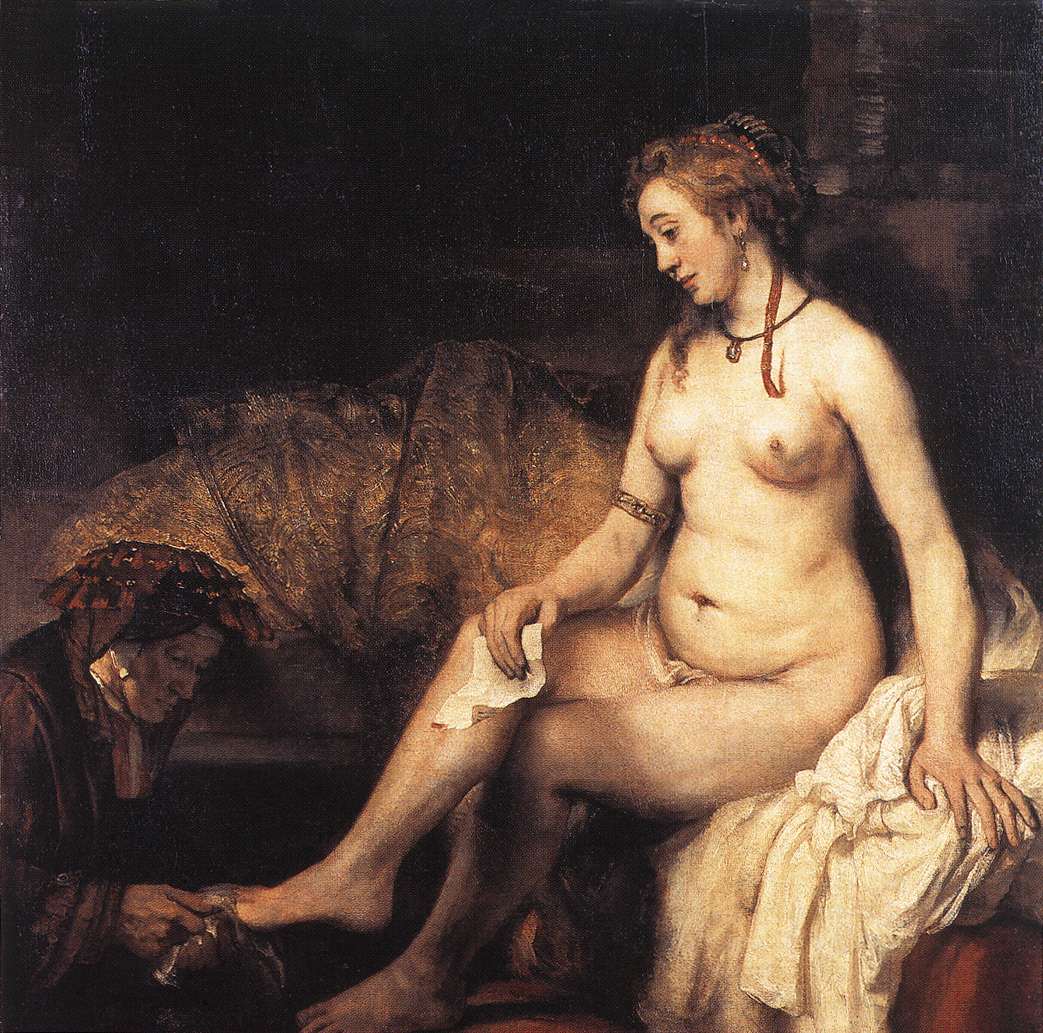
O último e mais belo nu de Rembrandt (1606-1669) como despudorado pretexto 🙂 para divulgar a página sobre o pintor holandês, elaborada a partir do texto gentilmente cedido por João Chambers, que co-produziu o programa Herança de Atena de 18 de Janeiro de 2009 com Ana Mântua, destinado a assinalar a passagem dos 340 anos da morte do Mestre!

Rembrandt Harmenszoon van Rijn - Bathsheba at Her Bath, 1654

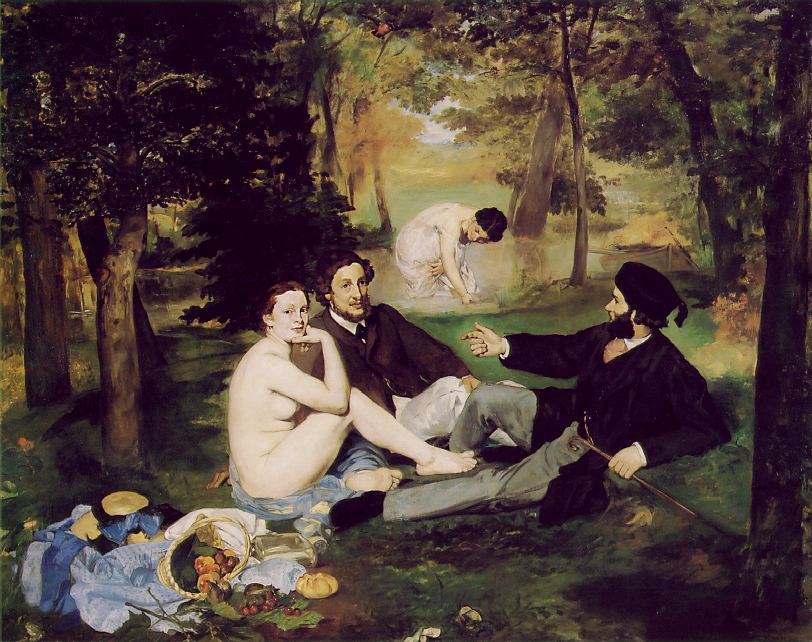
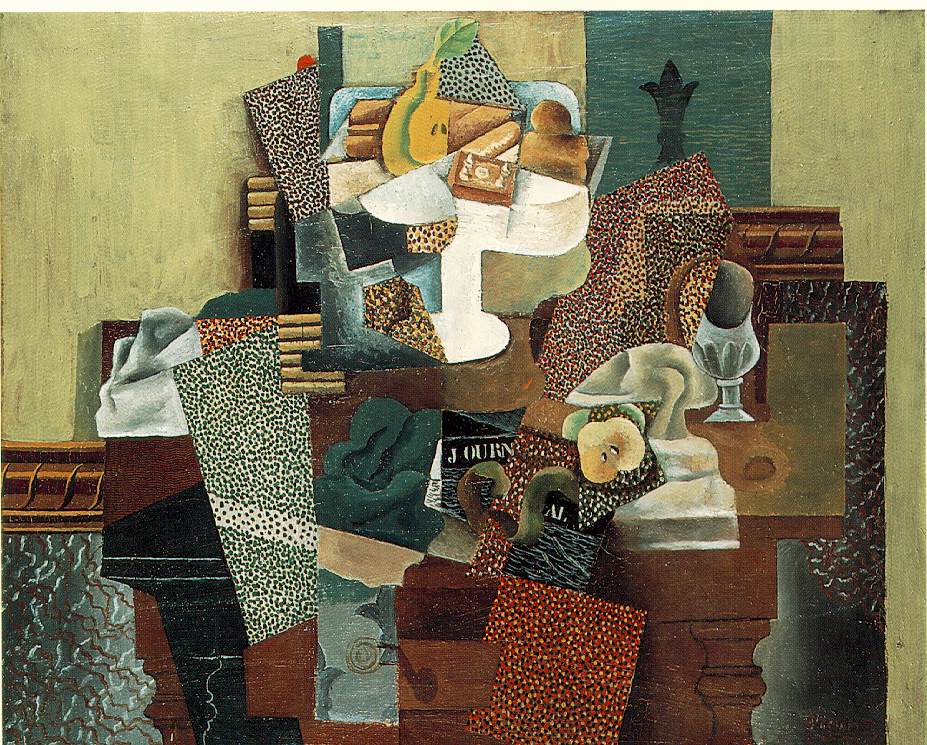
Dia Mundial da Alimentação

Paul Cezanne - Still Life with Green Melon, 1902-06

Edouard Manet - Le Dejeuner sur L'Herbe, 1863

Pablo Picasso - Still-life with Fruit-dish on a Table, 1914-15

Pierre-Auguste Renoir - Le dejeuner, c. 1879

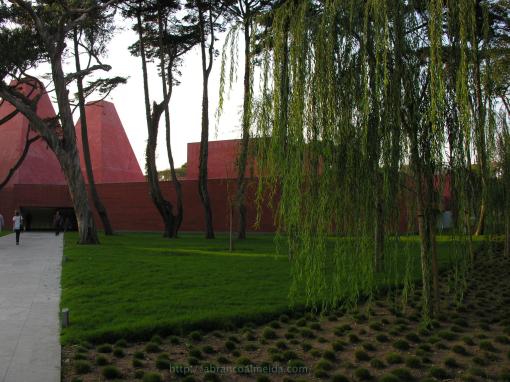
“Casa das Histórias” de Paula Rego

"Casa das Histórias" de Paula Rego - clique para entrar...

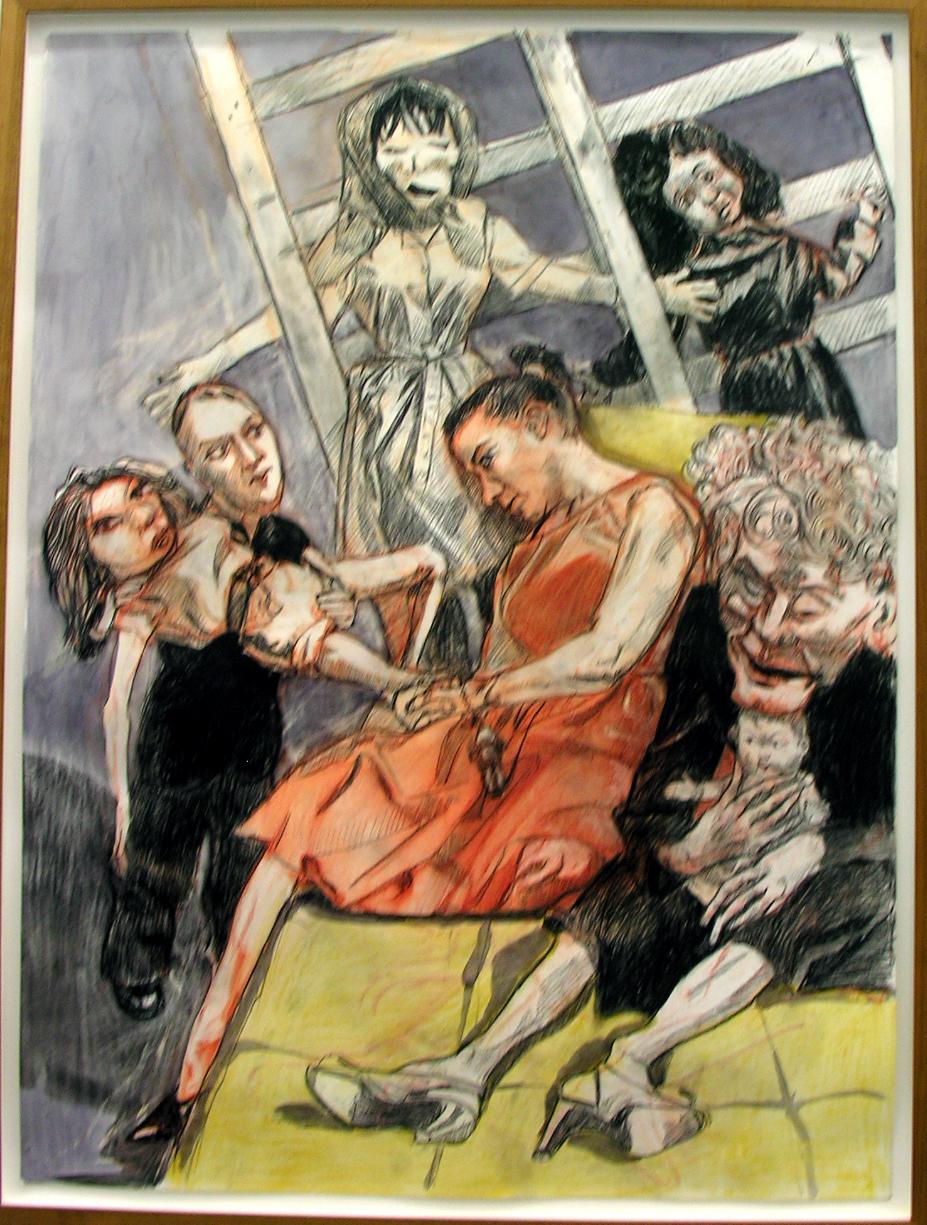
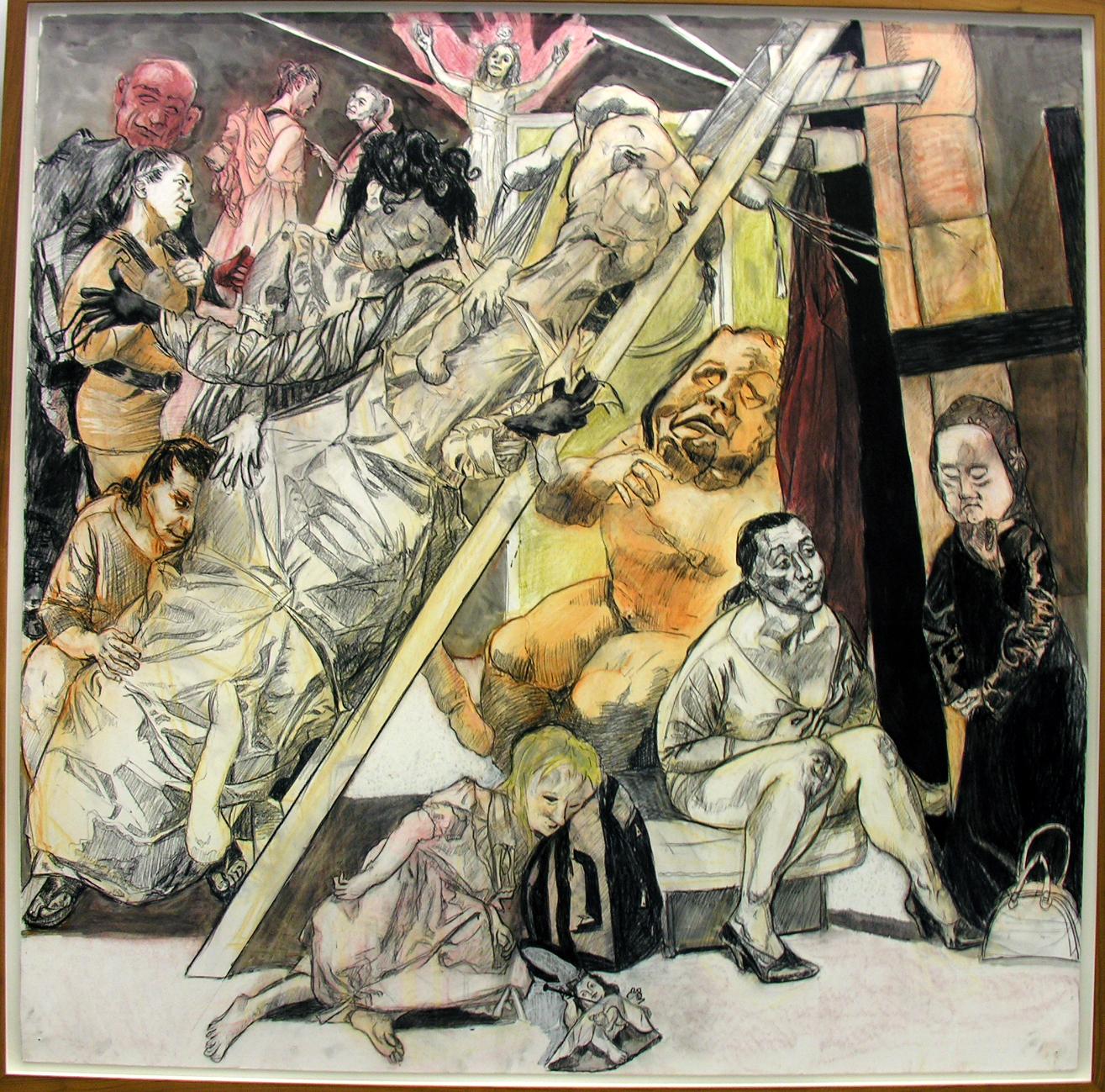
Human Cargo – Tríptico de Paula Rego

“É um tríptico sobre o tráfico humano. Foi tudo montado no meu estúdio. Com escadas, polícias, velas, meninas. E, no fundo do quadro, a minha amiga Tilly que leva a mochila cheia.”

Paula Rego.

Human Cargo - Tríptico, 2008. Colecção Marlborough Fine Art, Londres. Lápis conté e aguada sobre papel

Human Cargo - Tríptico, 2008. Colecção Marlborough Fine Art, Londres. Lápis conté e aguada sobre papel

Human Cargo - Tríptico, 2008. Colecção Marlborough Fine Art, Londres. Lápis conté e aguada sobre papel

Musica Aeterna – Johann David Heinichen

Os sábados musicais são enriquecidos com o Musica Aeterna, de autoria de João Chambers.
A emissão de hoje é dedicada a Claudio Monteverdi (1567-1643) e a Selva morale e spirituale, a primeira antologia de música sacra a ser publicada após as monumentais “Vésperas” de 1610.


Podcast de 05-09-2009
Do repertório sacro do teórico e homem de leis Johann David Heinichen (1683-1729), uma das grandes figuras do alto barroco alemão, destaco a Missa Nr 11 – Dixit Dominus, datada de 1728 e uma das criações mais tardias de Heinichen.
Esta obra foi executada pela Kammerchor Dresden e dirigida por Hans Christoph Rademann (biografia).