‘São Francisco de Assis’, de Francisco de Zurbarán
De Francisco de Zurbarán [Badajoz, 7 Novembro 1598 – Madrid, 27 Agosto 1664] pintor da idade de ouro espanhola, a representação de São Francisco de Assis, contemplativo enquanto segura numa caveira.

Archive for the ‘ Museus ’ Category
De Francisco de Zurbarán [Badajoz, 7 Novembro 1598 – Madrid, 27 Agosto 1664] pintor da idade de ouro espanhola, a representação de São Francisco de Assis, contemplativo enquanto segura numa caveira.
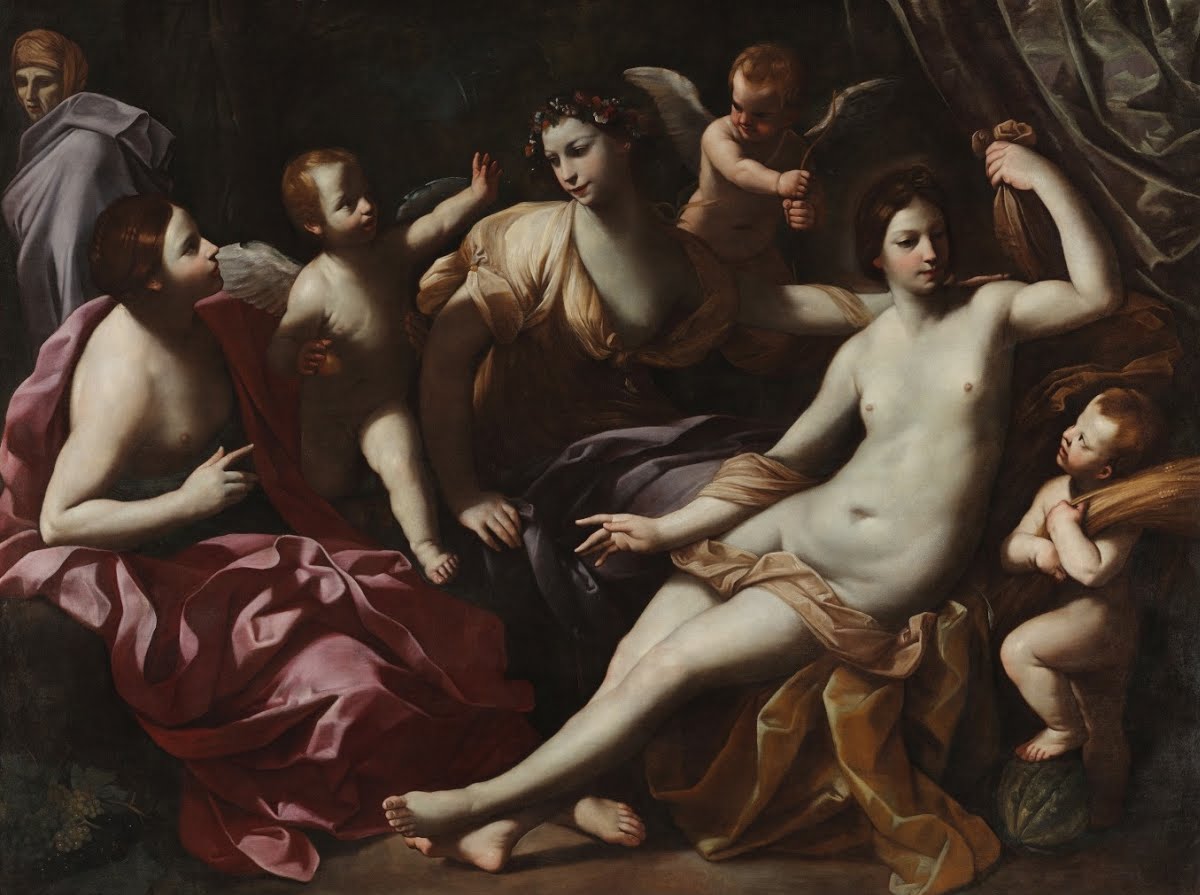
Do pintor italiano Guido Reni [4 Novembro 1575 – 18 Agosto 1642], a alegoria das Quatro Estações, realizada entre 1617 e 1620, que se encontra no Museu Capodimonte em Nápoles.
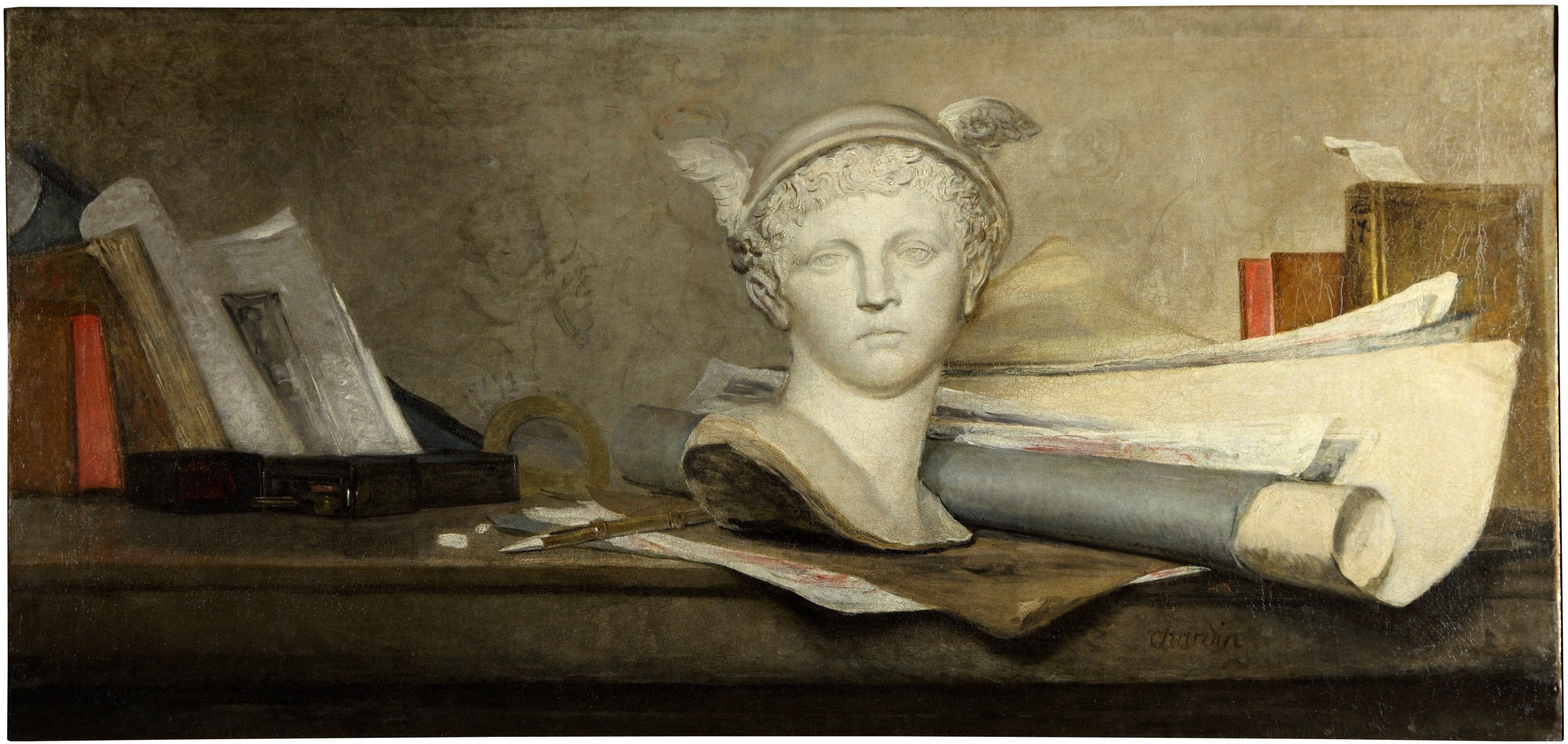
De Jean-Baptiste-Siméon Chardin [2 Novembro 1699 – 6 Dezembro 1779], a obra ‘Still Life with Attributes of the Arts’ (entre 1724-1728), que se encontra no Museu Estatal de Belas-Artes A.S. Pushkin em Moscovo.
De William Harnett [10 Agosto 1848 – 29 Outubro 1892], artista nascido no Condado de Cork na Irlanda e naturalizado cidadão americano aos vinte anos de idade, a obra ‘Still Life with the Toledo Blade’ de 1886 pertence ao período que passou na Europa e encontra-se no The Toledo Museum of Art – Ohio, EUA.

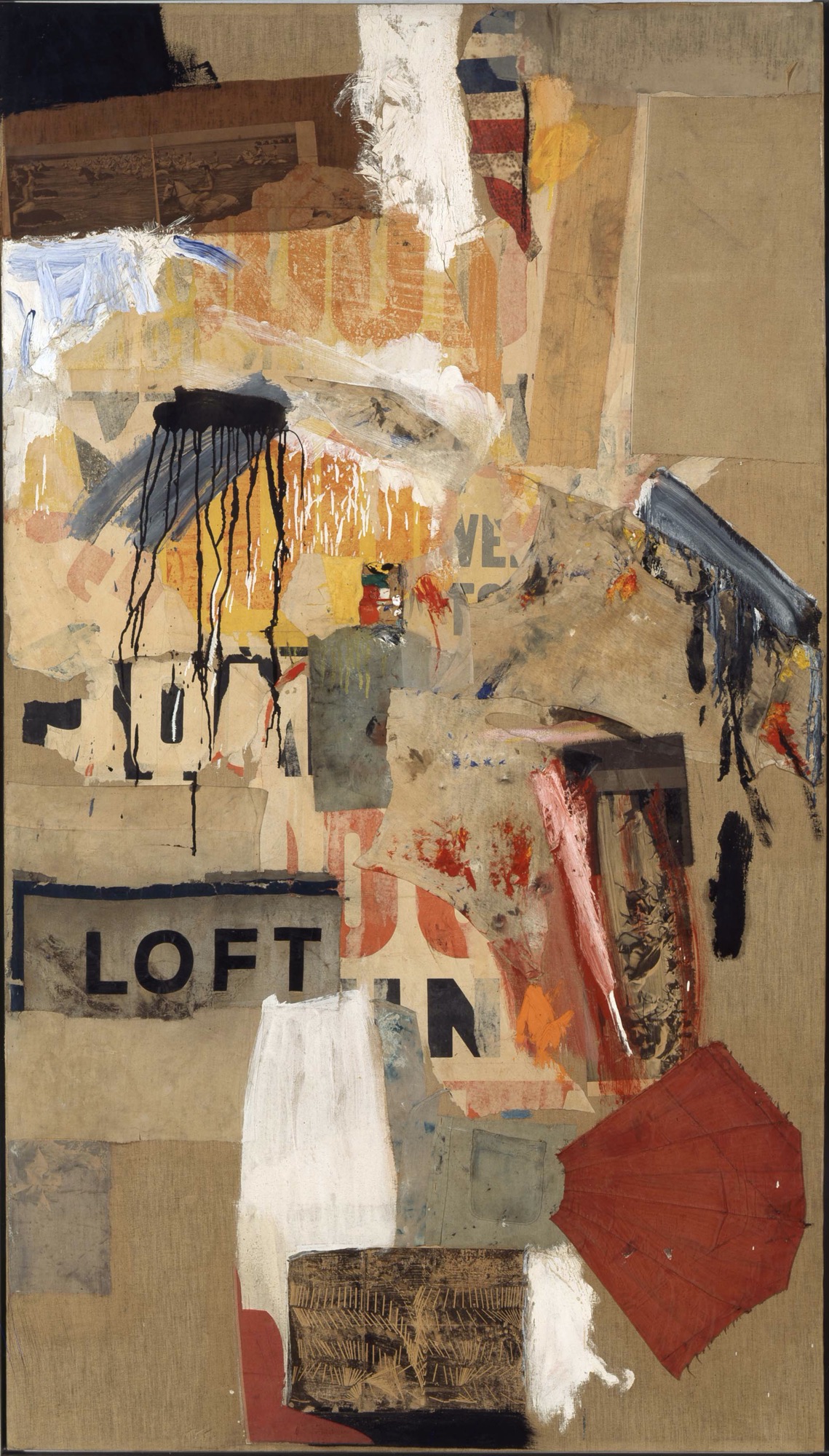
De Robert Rauschenberg [22 Outubro 1925 – 12 Maio 2008], precursor do expressionismo abstrato após a Segunda Guerra Mundial, ‘Double Feature’ de 1959, que se encontra no Kunstmuseum Basel, Suíça.
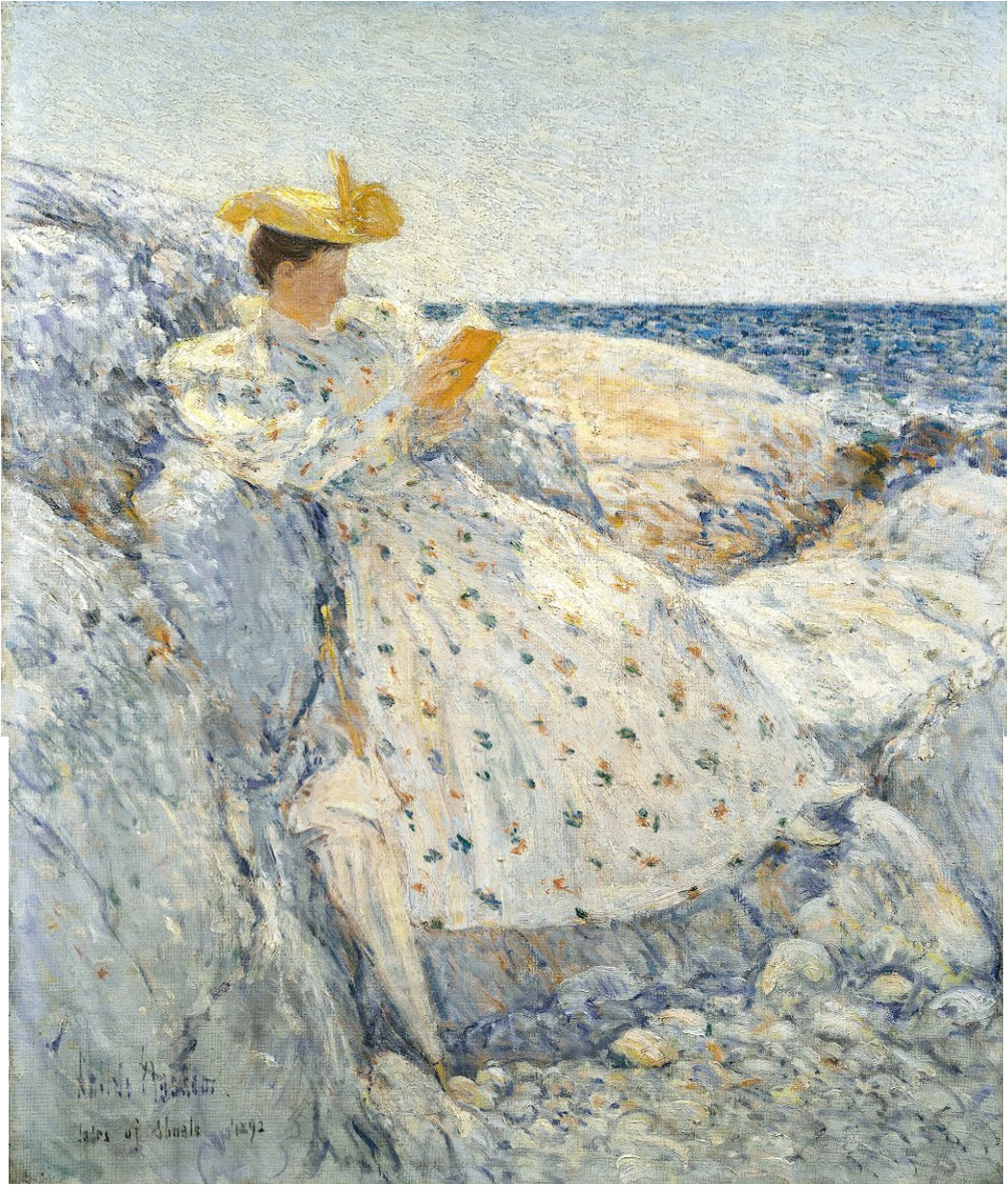
Os pintores Childe Hassam [17 Outubro 1859 – 27 Agosto 1935] e Mary Stevenson Cassat [22 Maio 1844 – 14 Junho 1926] tiveram uma influência decisiva na divulgação do Movimento Impressionista junto do meio cultural americano.
Hassam is probably best known for his views of New York City and landscapes of summer resorts in New England. Most of the latter were painted on the Isles of Shoals. Around the middle of the nineteenth century, the Isles of Shoals, ten miles out in the Atlantic off the New Hampshire coast, became a fashionable vacation site. In a period of rapid urbanization, these islands provided an atmosphere of wild nature combined with comfortable lodgings for writers, musicians, artists, and well-off tourists. It was here that Childe Hassam engaged in summer painting campaigns for some thirty years.
Summer Sunlight belongs to this group of “Shoals” works. Painted in 1892, it is an excellent example of the period during which Hassam executed his most lyrical, atmospheric works. The setting is probably Appledorf Island, where a friend, the writer Celia Thaxter, had a home. Like many of the “Shoals” paintings, it is infused with a sense of bright light and fresh air. Via The Israel Museum, Jerusalem.
Summer Sunlight (Isles of Shoals), 1892
De Lucas Cranach ‘o Velho’ [c. 1472 – 16 Outubro 1553] ‘Hunt at the Castle of Torgau in Honour of Charles V’

Hunt at the Castle of Torgau in Honour of Charles V, 1544. Oil on panel. Room 055B
A hunting scene characterized by a very developed landscape castle of Hartenfels in Torgau (Saxony). Among those taking part are the Emperor Charles V and John Frederick the Magnanimous, Elector of Saxony (at the lower left), together with the latters wife, Sibylla of Cleves (on the right, dressed in red). The hunt never actually took place and the painting is in fact an allegory of good government, symbolised by the hunt. The painting was given by the Elector, a supporter of the Reformation, to the Emperor. It is dated 1544, the year of the fourth Diet of Speyer when Charles V finally ratified the Elector´s marriage, held in Torgau in 1527. This work is signed with the monogram of Lucas Cranach and dated 1544. It was brought to Spain by Maria of Hungary and hung in the El Pardo Palace, where it is listed in the inventory of 1564. Lucas Cranach and his workshop painted various scenes similar to this one. Each of them shows the elector of Saxony in possession of Torgau Castle, accompanied by different rulers of that time. Those paintings, which may have been commissioned by elector Johann Friedrich as presents to other princes during the fifteen forties, have a political meaning. On one hand, they depict him as the legitimate Lord of his territory, with a commitment to the Reformation, as Torgau was the first Protestant church built ex-novo. At the same time, hunting was synonymous with good government at that time, and it alludes to the necessary collaboration among rulers in order to insure peace.
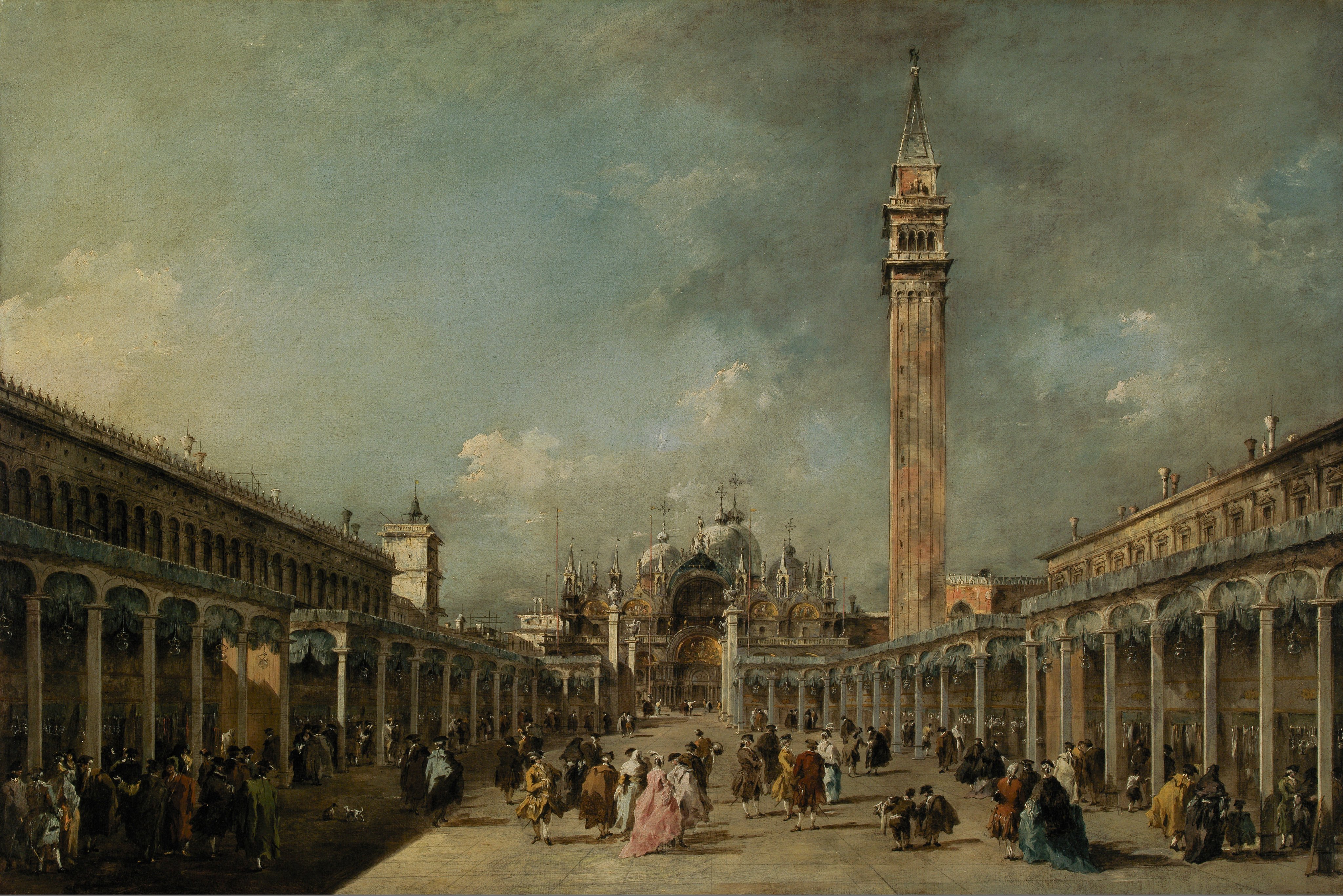
Adquirida por Calouste Gulbenkian em 1919, esta obra do pintor veneziano Francesco Guardi [5 Out 1712 – 1 Jan 1793] pertence à colecção permanente do Museu.
Considerada uma das obras-primas de Guardi, a veduta representa a Praça de São Marcos decorada para a realização do mais sumptuoso festival de Veneza, a Festa della Sensa. Este acontecimento vivia no Dia da Ascensão a cerimónia de celebração do casamento simbólico entre Veneza e o mar, evocação da vitória longínqua que dera à cidade o controlo naval do Adriático.
Para além da basílica, avistam-se na pintura o campanário, a torre do relógio, o palácio ducal, quase impercetível, à direita, e os edifícios dos procuradores de São Marcos, parcialmente encobertos por arcadas temporárias, onde eram exibidos os produtos mais apreciados do artesanato veneziano.
Em tela de surpreendente efeito atmosférico, o pintor cria um espaço fantástico, de dinâmica teatral, pleno de contrapontos, sugerindo a impressão de tudo ser vivo e imediato. As personagens em primeiro plano, magnificamente distribuídas no «cenário» festivo, acrescentam ao conjunto movimento e agitação febril. Via.
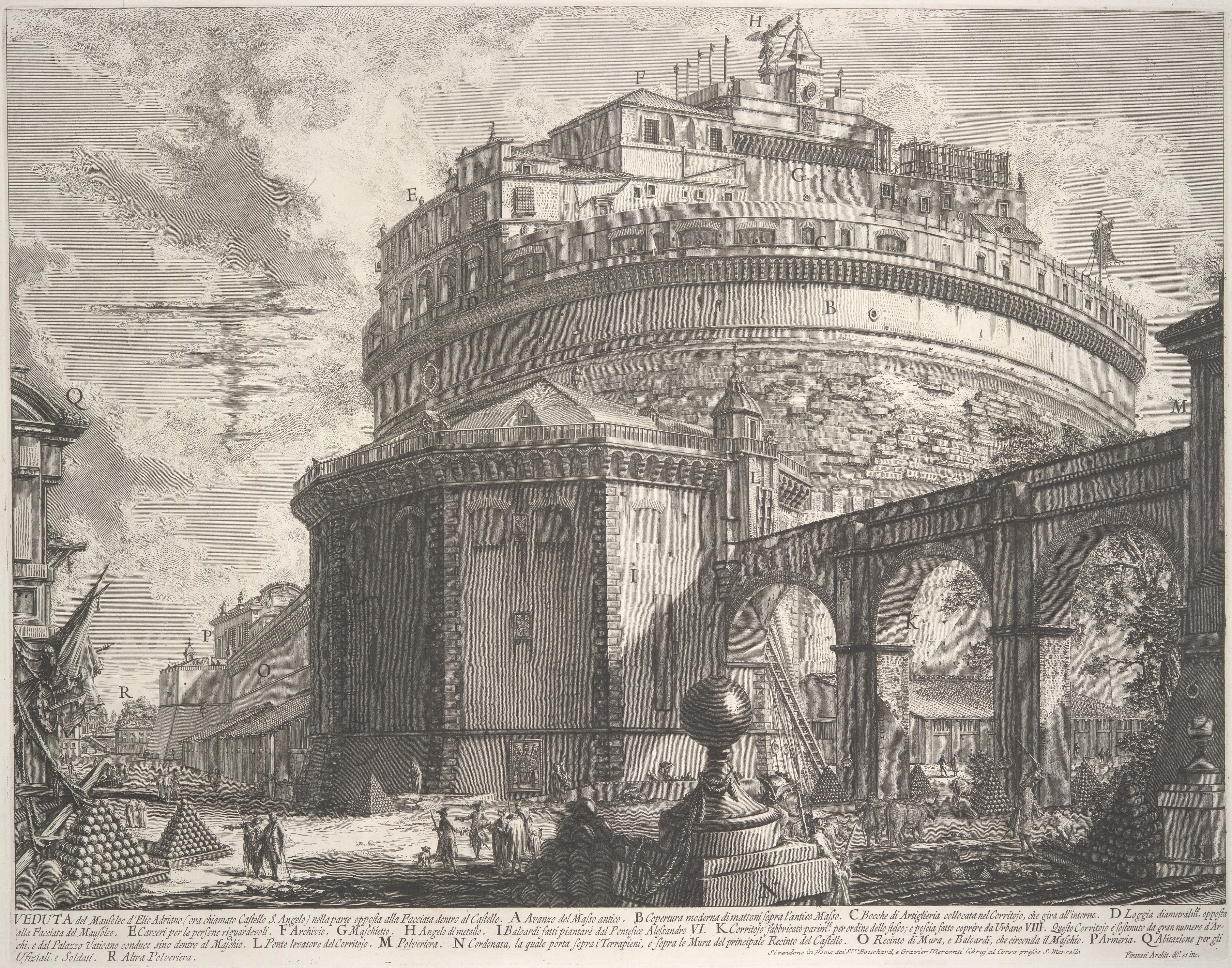
Giovanni Battista Piranesi [Veneza, 4 Outubro 1720 – Roma, 9 Novembro 1778] foi arquitecto, teórico e arqueólogo. Fascinado pelas antiguidades da Cidade Eterna deixou uma extensa obra como gravador, com destaque para as Vedute di Roma ou ‘Vistas de Roma’ e ainda o conjunto Carceri d’invenzione ou ‘Prisões Imaginárias’.
Na passagem dos 420 anos do nascimento de De Jan Brueghel, o Jovem [13 Setembro 1601 – 01 Setembro 1678], a obra “Aeneas and the Sibyl in the Underworld”, dos anos 1630, inspirada nas paisagens do inferno de Jan Brueghel, o Velho, que por sua vez remetia para a obra de Bosch. O tema pertence a Virgílio, Eneida, Livro VI. »


| S | T | Q | Q | S | S | D |
|---|---|---|---|---|---|---|
| 1 | ||||||
| 2 | 3 | 4 | 5 | 6 | 7 | 8 |
| 9 | 10 | 11 | 12 | 13 | 14 | 15 |
| 16 | 17 | 18 | 19 | 20 | 21 | 22 |
| 23 | 24 | 25 | 26 | 27 | 28 | 29 |
| 30 | 31 | |||||


 Visita Guiada é um programa de televisão e de rádio que dá a conhecer o Património Cultural português.

 António Branco Almeida
 Ana Margarida Lopes


 O Universo Numa Casca de Noz