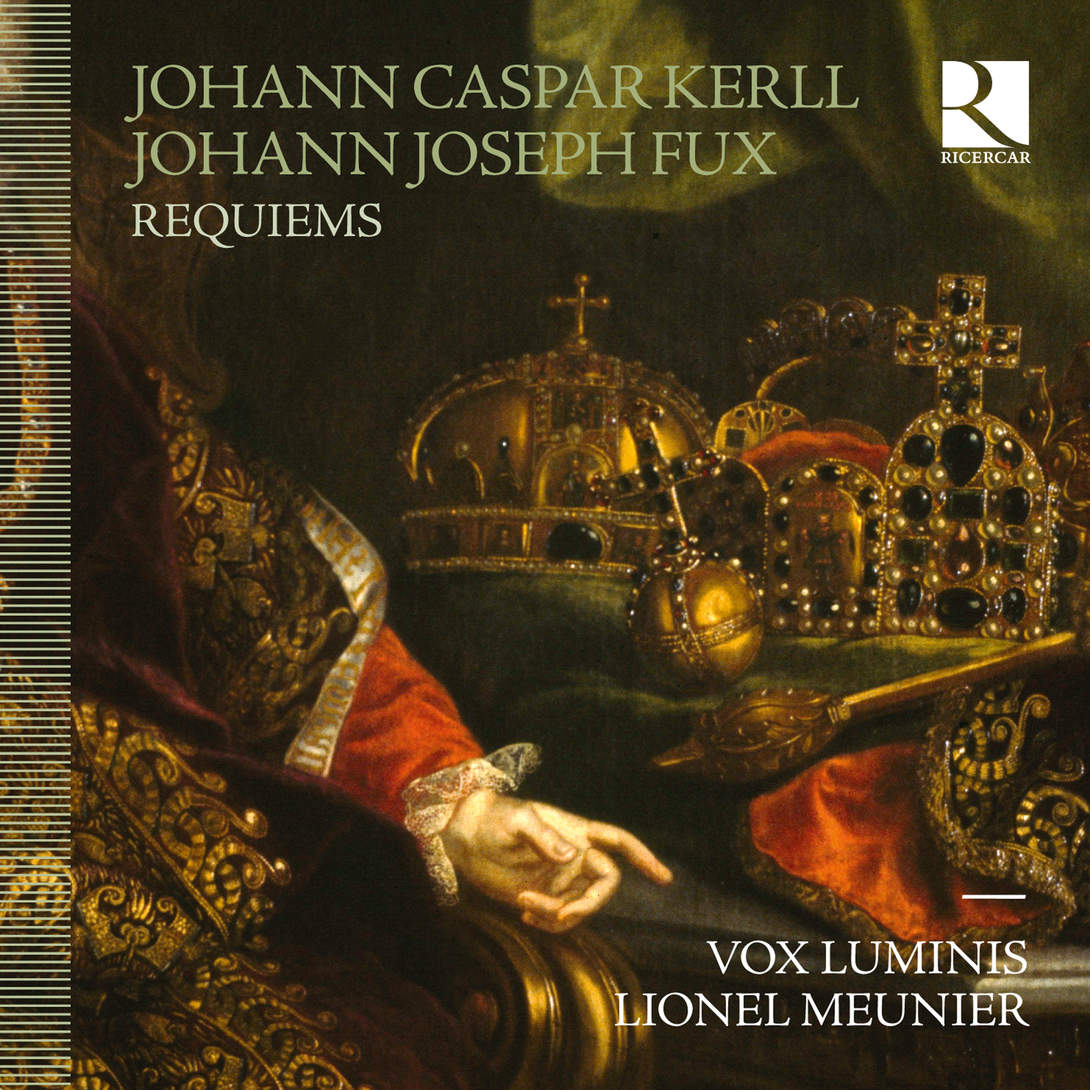
Na passagem do ducentésimo octogésimo quarto aniversário sobre a morte de Johann Joseph Fux [ca. 1660 – 1741], compositor e teórico musical austríaco do barroco tardio que exerceu o cargo de Kapellmeister na Catedral de Santo Estêvão em Viena, o solene Kaiserrequiem K 51–53 em Dó menor para cinco vozes, originalmente escrito em 1720 para o funeral de Eleonora Magdalena, viúva do Sacro Imperador Romano-Germânico Leopoldo II, foi posteriormente executado em outras cerimónias fúnebres da Côrte. Composto pelo Introitus, Kyrie, a sequência Dies irae, o ofertório Domine Jesu Christe, Sanctus,Benedictus, Agnus Dei e a comunhão Lux aeterna, integra o álbum Johann Joseph Fux, Johann Caspar Kerll: Requiems | ℗ Outhere, 2016.
Tem como intérpretes os Ensembles L’Achéron e Vox Luminis, com direcção de Lionel Meunier.
Carolyn Sampson, soprano | Hilary Summers, contralto | James Gilchrist ,tenor | Peter Harvey ,baixo | Choir of the King’s Consort | The King’s Consort | Robert King
“Robert King suggests that Michael Haydn‘s Requiem of 1771 for the Archbishop-Prince of Salzburg (28-02-1698 / 16-12-1771) reflects a personal outpouring of grief for the loss of Haydn’s beloved patron and the recent death of his infant daughter. The fervent expressions of grief, consolation and hope must have made some impression on the 15-year-old Mozart. A comparison with Mozart’s Requiem setting of 20 years later is inevitable: Haydn didn’t give his solo quartet anything that compares with the immediacy of Mozart’s ‘Tuba mirum‘, but the older man’s masterful choral writing, brilliant orchestral scoring and sensitive use of solo voices created plenty of musical riches and dramatic moods, such as the brooding Kyrie and the bursting energy of the ‘Dies irae’.
The quartet of soloists is impeccable; the choir and orchestra of The King’s Consort prove to be increasingly assured and dynamic with each recording released. Robert King’s measured and emphatic direction makes it easy to appreciate why the Requiem was performed at his brother Joseph’s funeral in 1809.
His interpretation of the sunnier, extrovert Missa in honorem Sanctae Ursulae (1793) helps the music to sound natural and spontaneous. In some respects the Mass is an even finer composition, full of charismatic and inventive musical charms (it’s worth buying for Carolyn Sampson’s ravishing ‘Benedictus’ alone).
Anybody who enjoys the choral works of Mozart and Joseph Haydn will be delighted by this double-disc set, and will probably concur that Michael Haydn’s neglect in the shadow of his younger friend and older brother is substantially corrected by these exquisite performances.”Gramophone Classical Music Guide, 2010. Via.
David Hockney 25 Fondation Louis Vuitton Du 09/04/25 au 31/08/25
Artemisia - Héroïne de l'art Musée Jacquemart-André À partir du 19 mars 2025
Join the celebrations for JMW Turner’s 250th anniversary in 2025 Tate Britain, London
Guest House
1.170.554 visitors
Calendário Cósmico
Abril 2026
S
T
Q
Q
S
S
D
1
2
3
4
5
6
7
8
9
10
11
12
13
14
15
16
17
18
19
20
21
22
23
24
25
26
27
28
29
30
Jos d’Almeida
Jos d'Almeida é um compositor de música electrónica épico sinfónica, podendo este género ser também designado como Electrónico Progressivo. Na construção de um som celestial, resultante da fusão de várias correntes musicais, JOS utiliza os sintetizadores desde o início dos anos 80.
Chuck van Zyl
Chuck van Zyl has been at his own unique style of electronic music since 1983. His musical sensibilities evoke a sense of discovery, with each endeavor marking a new frontier of sound.





 António Branco Almeida
 Ana Margarida Lopes


 Visita Guiada
 O Universo Numa Casca de Noz